-
Vienna.
Dec. 5 – 9, 2025
Market Mania
I fell in love with Vienna watching the film Before Sunrise, watching Ethan Hawke and Julie Delpy aimlessly wandering the streets of the city, falling in love themselves. Vienna was shown as elegant and grand, but also warm and intimate. Filled with twisting medieval alleys, where secret treasures lay beyond each turn and bend. Shining with baroque opera houses and gilded palaces, displaying the immense wealth and power of the Holy Roman Empire, of which it was the capital for some 200 years.
Vienna is also the Christmas Market capital of the world. Apparently the markets can see as many as 3 million visitors in November and December, 30% of Vienna’s total tourism for the year. This influx of people had the knock-on effect that accommodations were much harder to come by than I’d grown accustomed to and prices were about four times that of the cities that I’d visited previous.
Unfortunately, Vienna came at a low point for me moodwise. I’d been fairly asocial since leaving Stuttgart, with the exception of Berlin. And it felt like it had been nearly a month since I’d seen the sun. The endless gray skies of the late fall had begun to take their toll on me and the days were ending earlier than ever, with the light fading from the sky by 4:30. Mercifully, in Vienna the cold of the previous weeks abated and I was able to stay outside for fairly long stretches and the sun made some brief, but appreciated, appearances.
Visiting Vienna
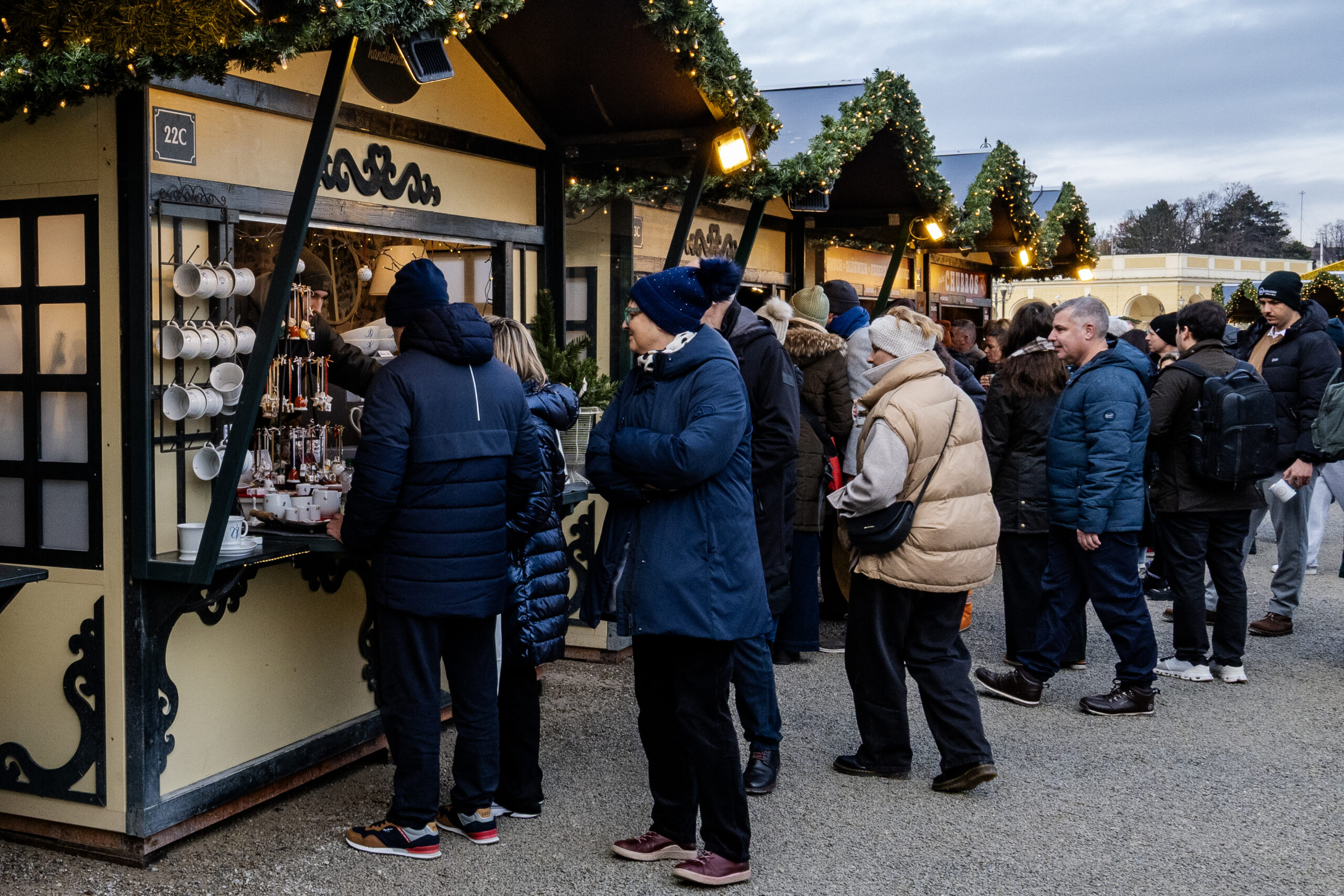
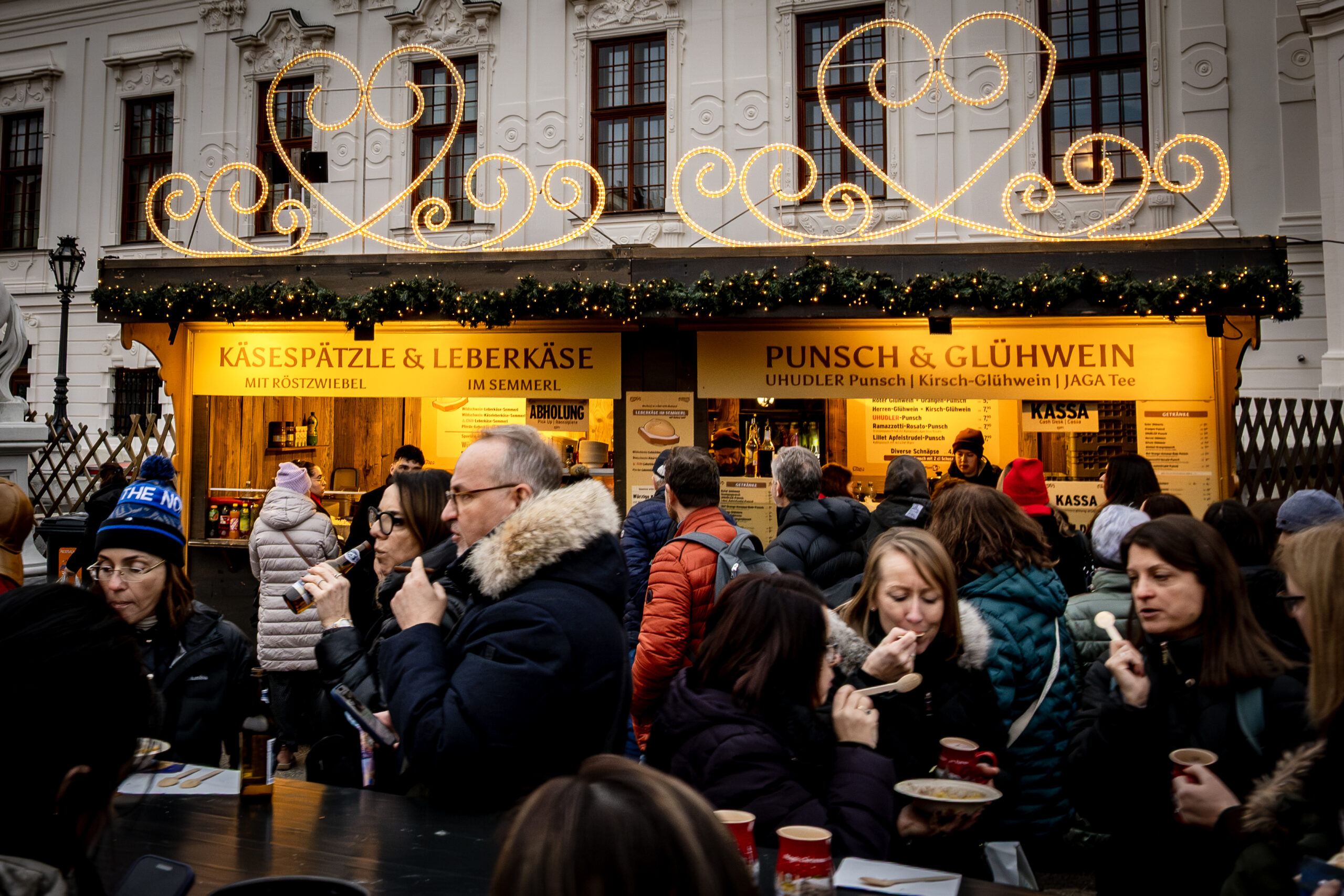
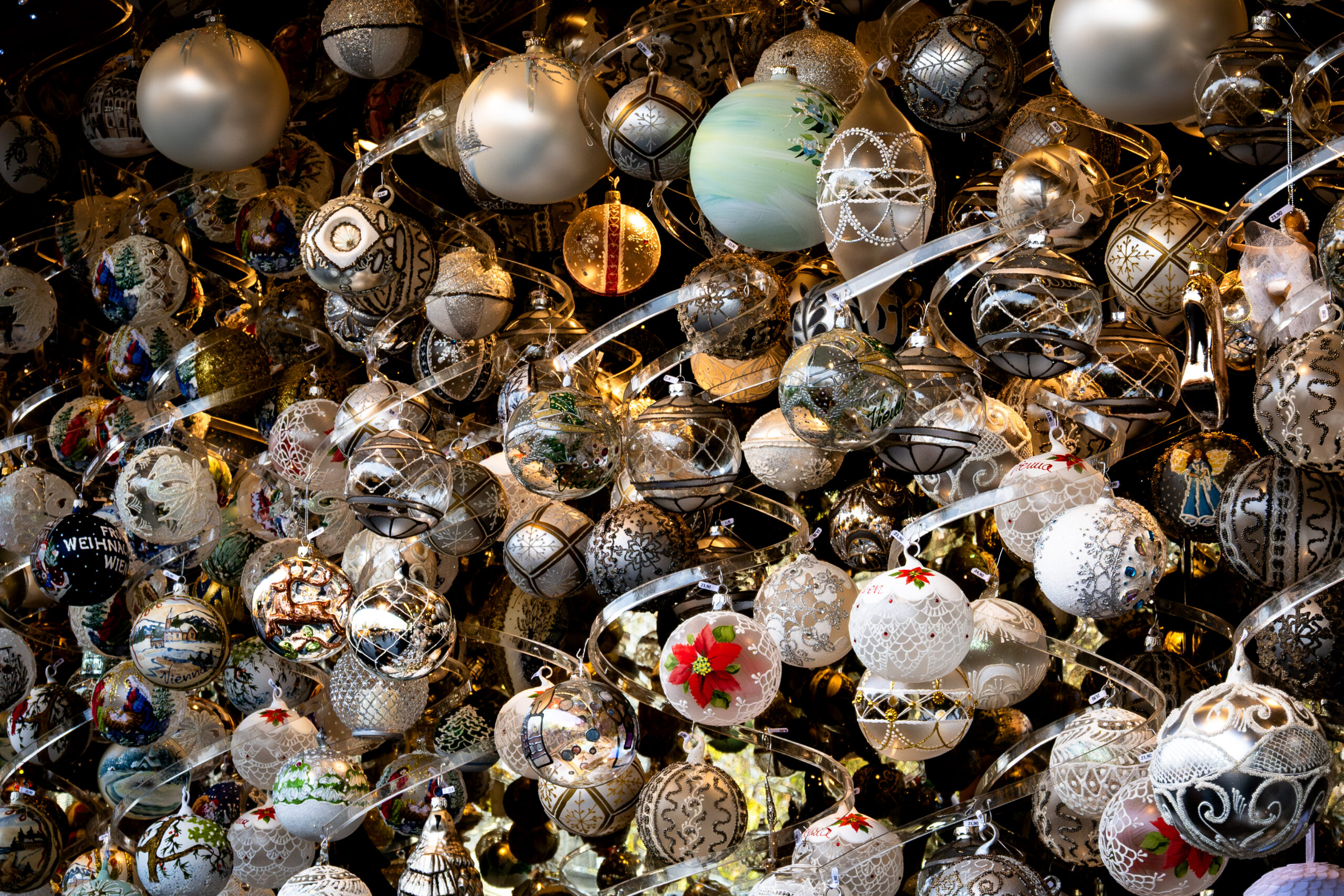
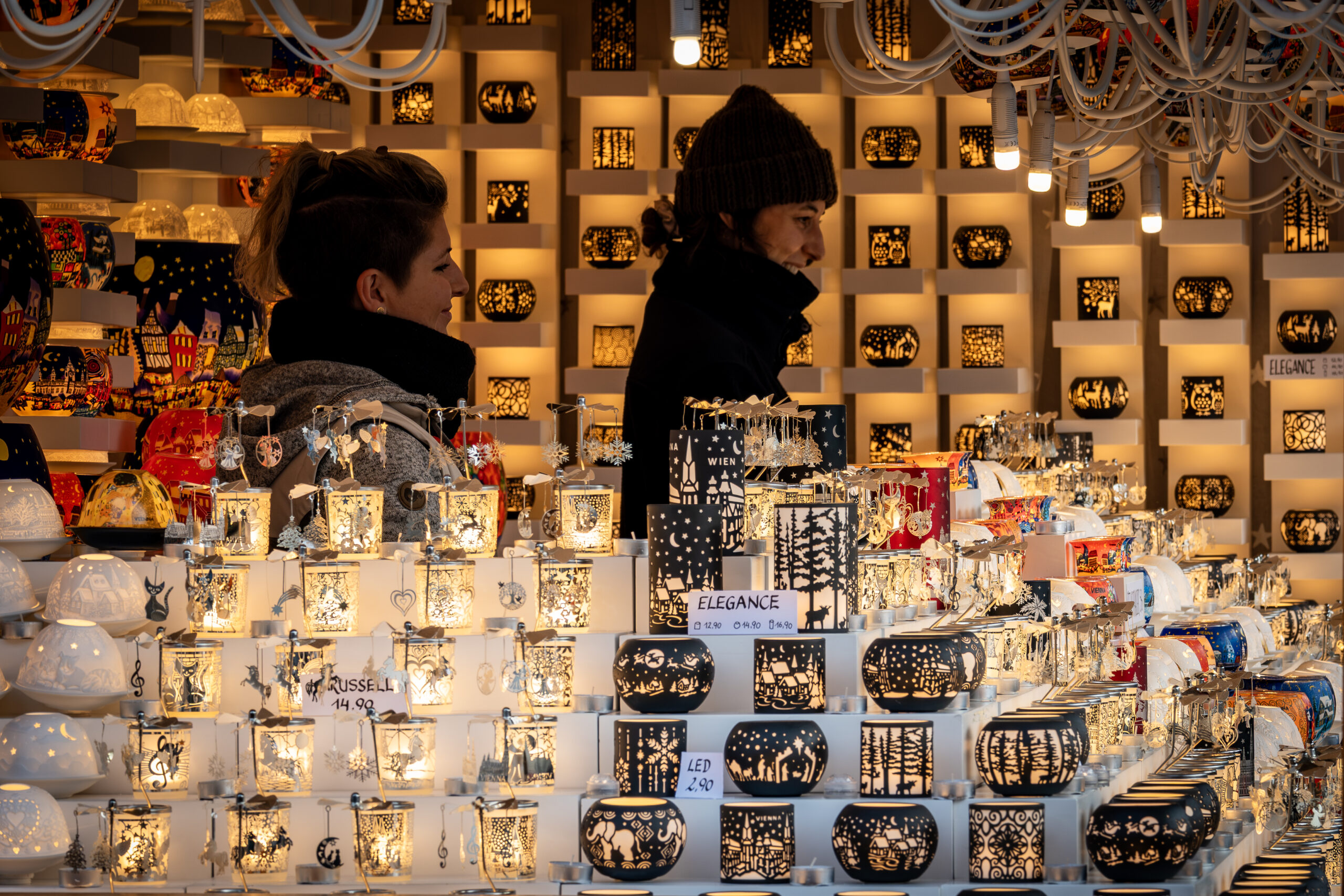
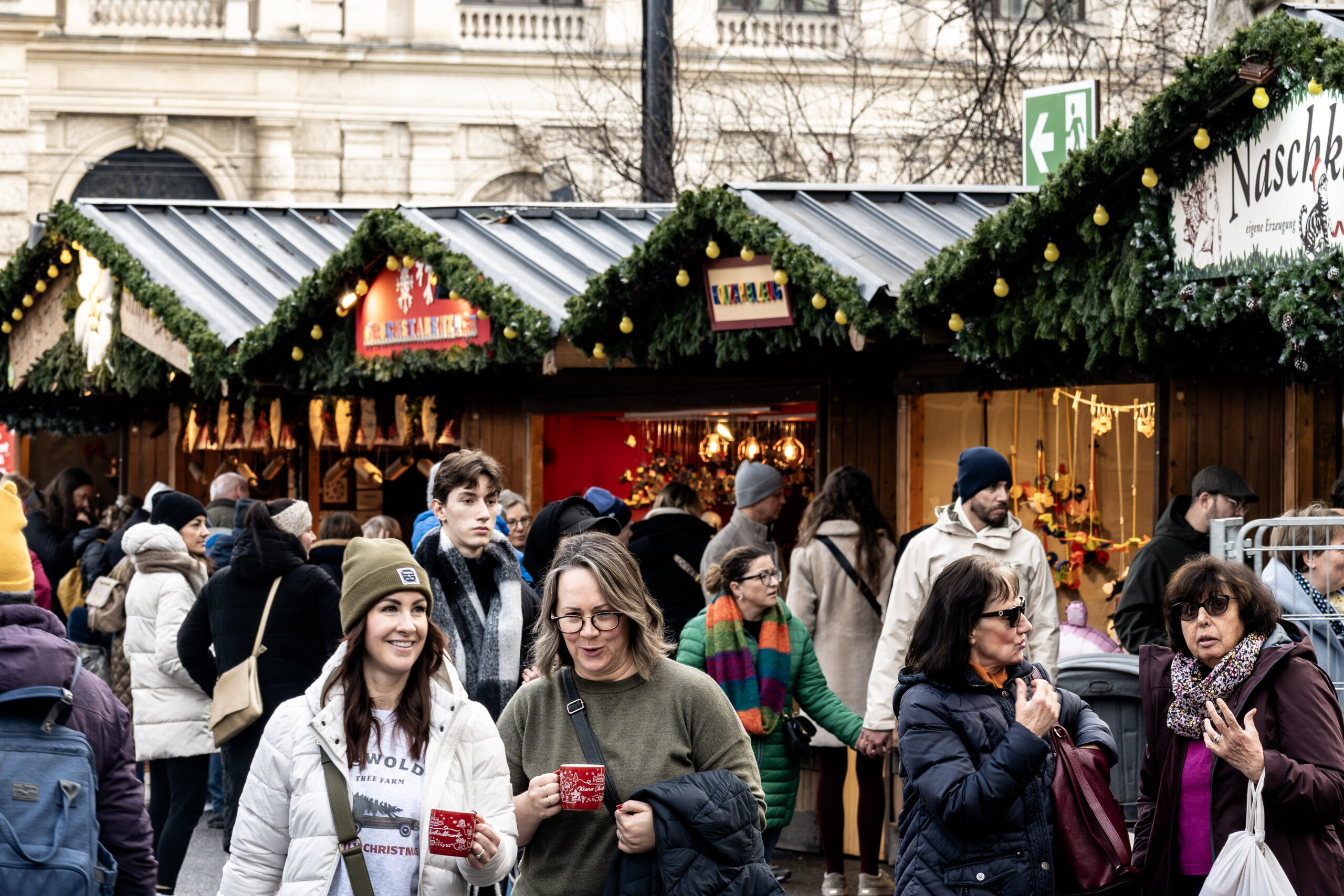
- Vienna has more than 30 Christmas markets in operation starting in late November. I made it my mission to visit as many as I could over the course of my three days in the city. Honestly, I’m not sure how many I made it to, I think it was about seven or eight. The markets themselves were fairly repetitive, so the most memorable ones were those set in fantastic locations.
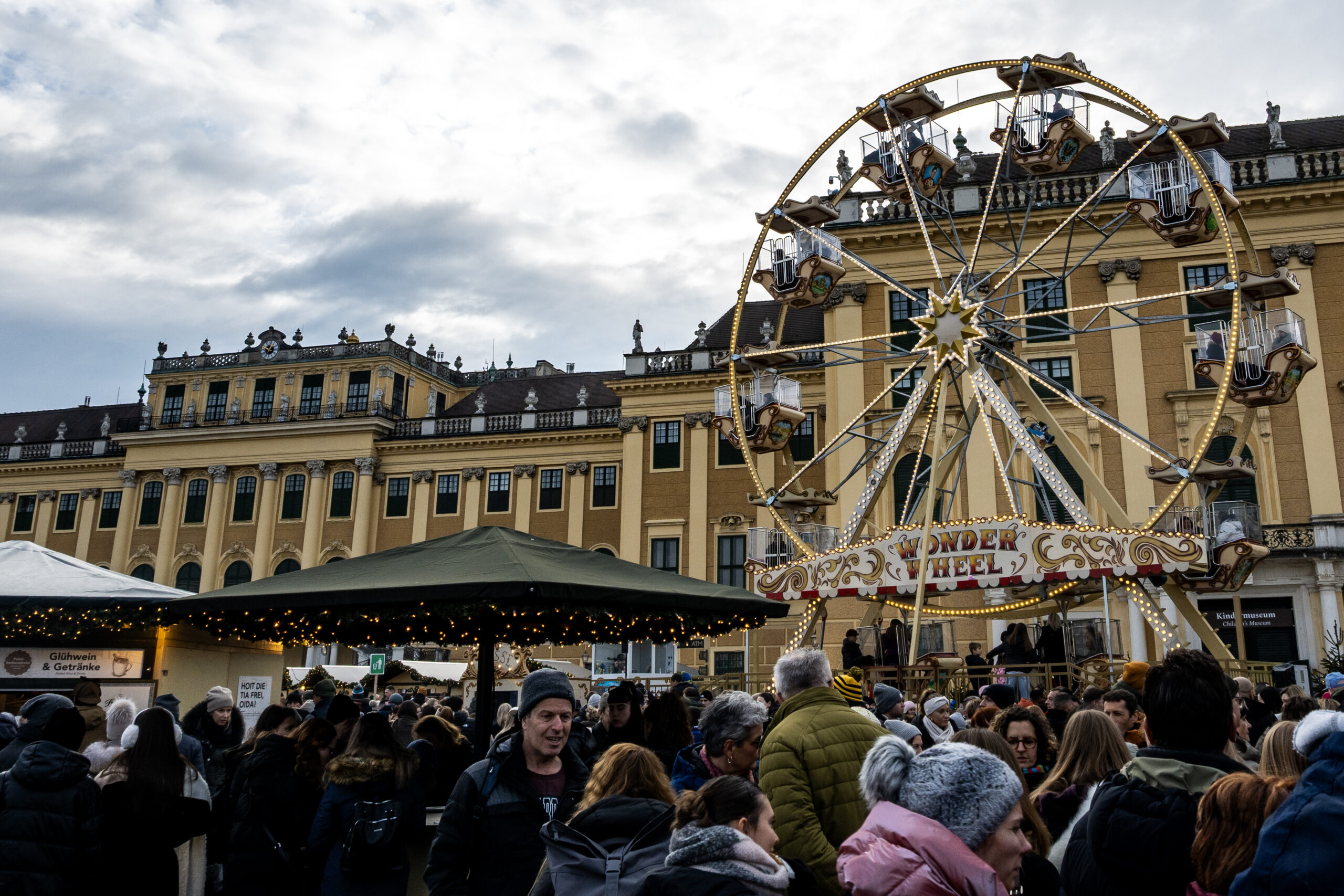
- Schönbrunn Palace hosted the first of the markets that I visited, shown in the title image above. It was about mid-day on a Sunday morning and already the market was bustling. As with the market in Dresden, there were stalls with all sorts of goods and foods, stages, rides, and other amusements, like a skating rink. All of this was set in the square created by the stretched arms of the Schonbrunn Palace, once the summer residence of the Hapsburg Emperors.
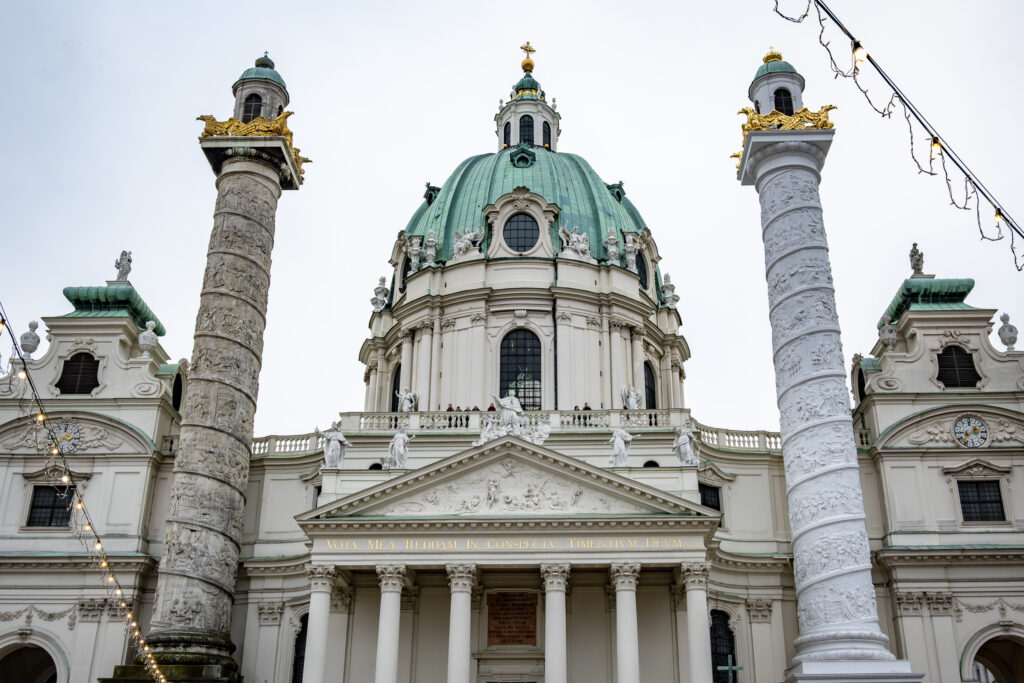
- The Karlsplatz market was laid out in front in front of the majestic baroque Karlskirche, with its patinated copper dome and monumental, columnar minarets.
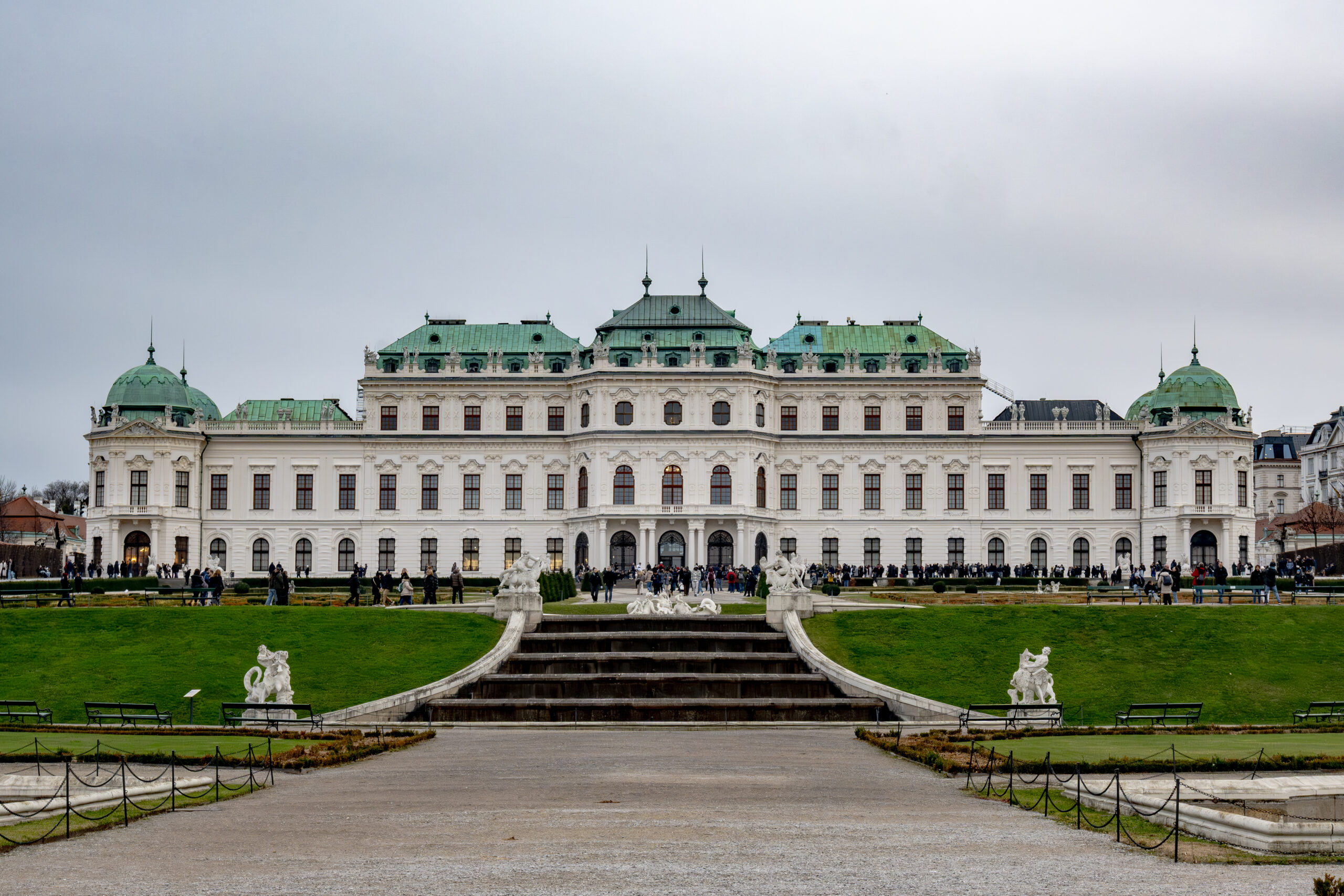
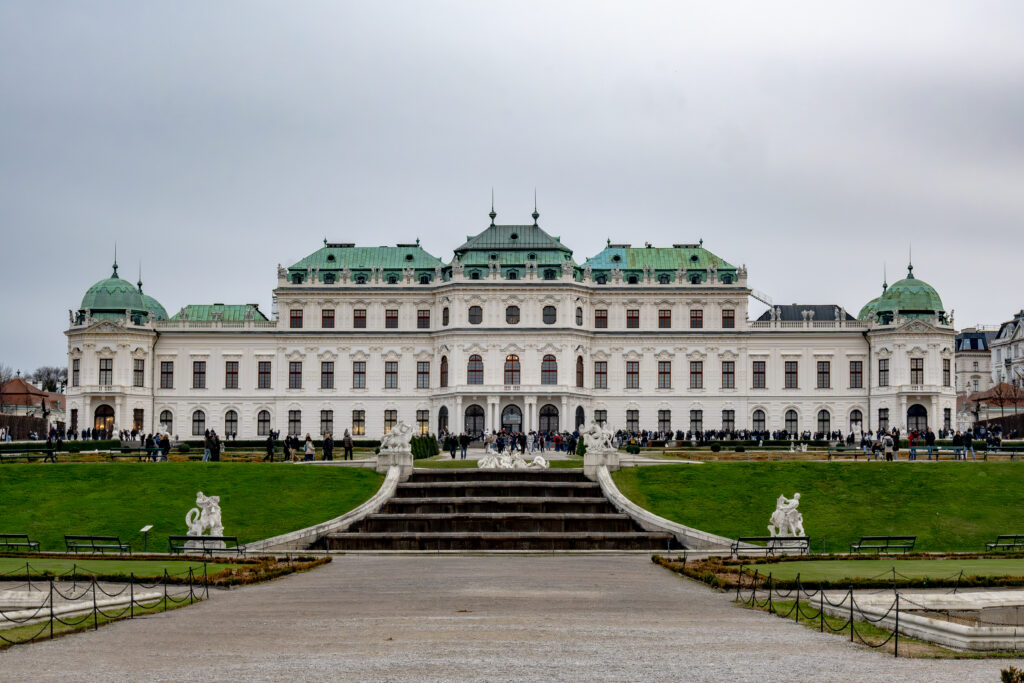
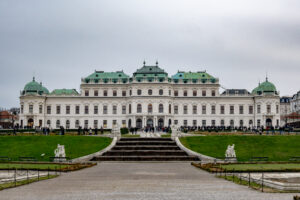
- Belvedere Palace, another Hapsburg residence, now a world-renowned art museum, holds its smallish market right in front of the palace.
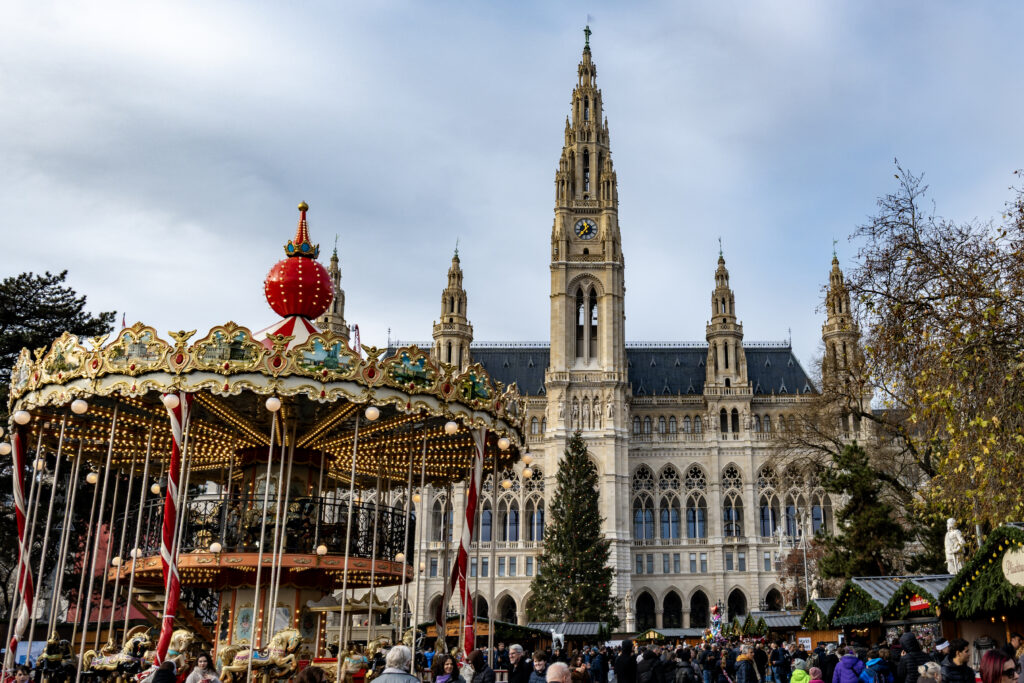
- The Rathaus Market is one of the most popular markets in Vienna, and was probably my favorite. It was a good size but was spread out enough that you weren’t constantly bumping into other market-goers. The impressive Weiner Rathaus (Vienna City Hall) overlooks one end of the market while the neo-baroque Burgtheater presides over the other end.
- At the center of the old town in Vienna is Stephansplatz, featuring the 13th century gothic cathedral, Stephansdom. It sits squarely in the middle of a luxury shopping street that was decorated to the nines for the holiday season. I walked through Stephansplatz at least twice during my couple of days in Vienna and the entire area was a complete crush of people. It was here, more than anywhere else, that I could really feel the full weight of the tourist season pressing down on the city.
- I spent a day visiting the Albertina Modern art museum. They were hosting an exhibit on modern gothic art that I was interested in seeing. I only remember small bits of that day now, so I feel that I must have been somewhat disappointed with the offerings, though I fear I couldn’t say exactly why.
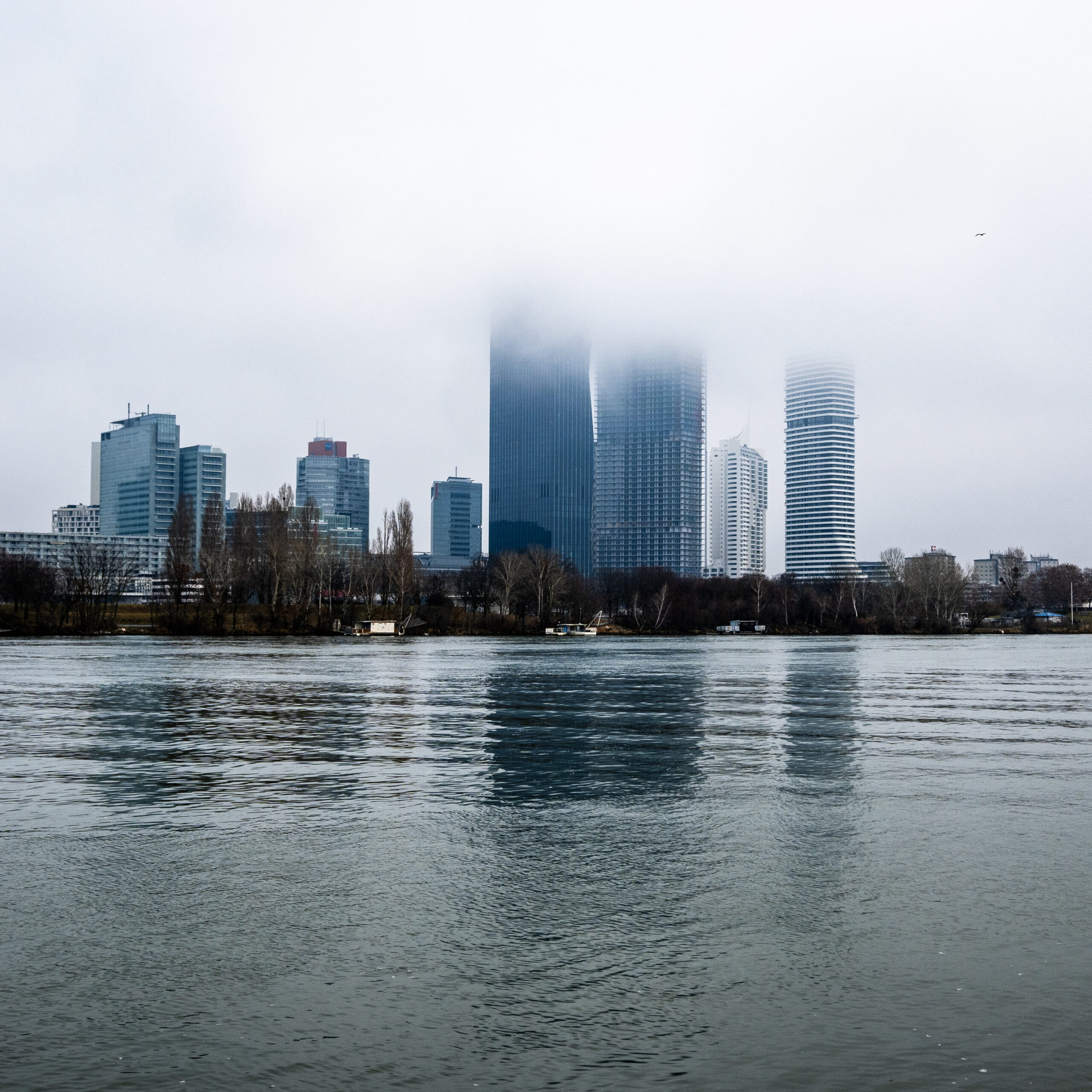
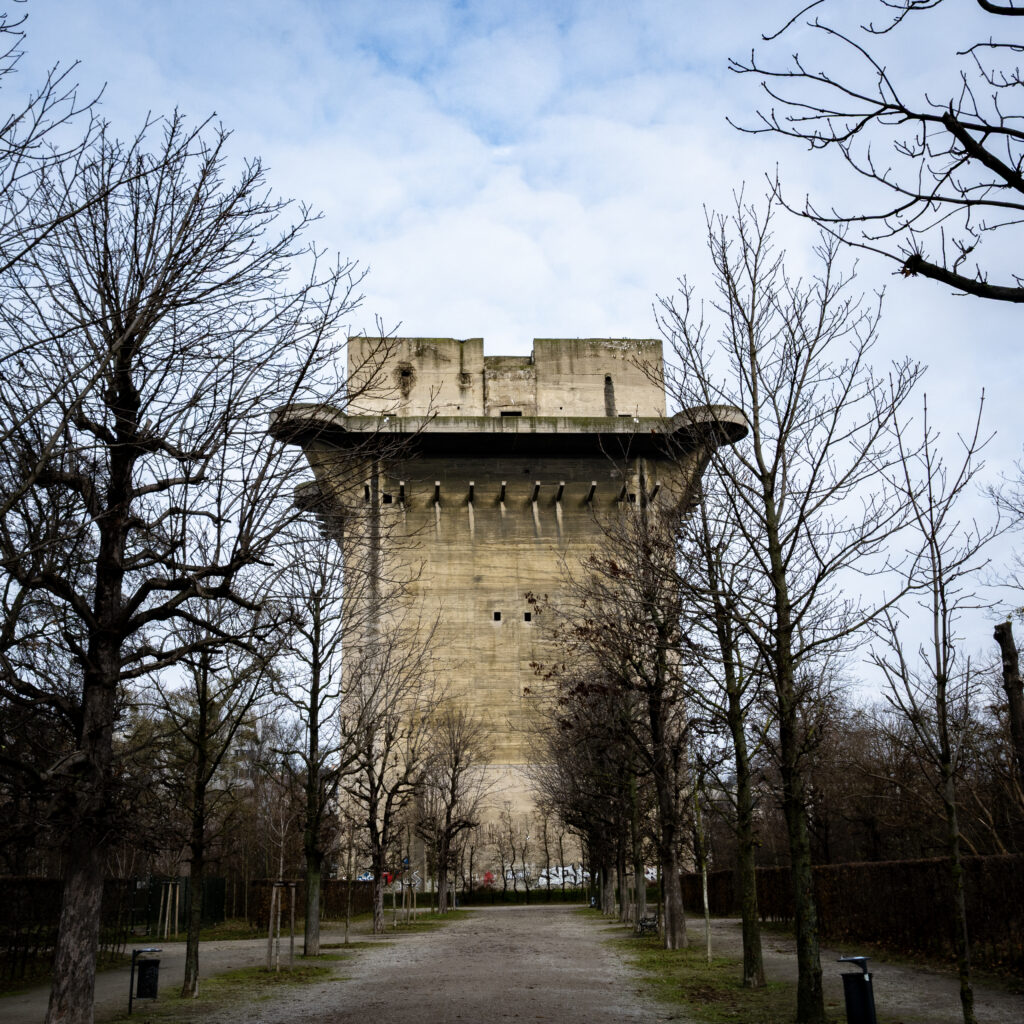
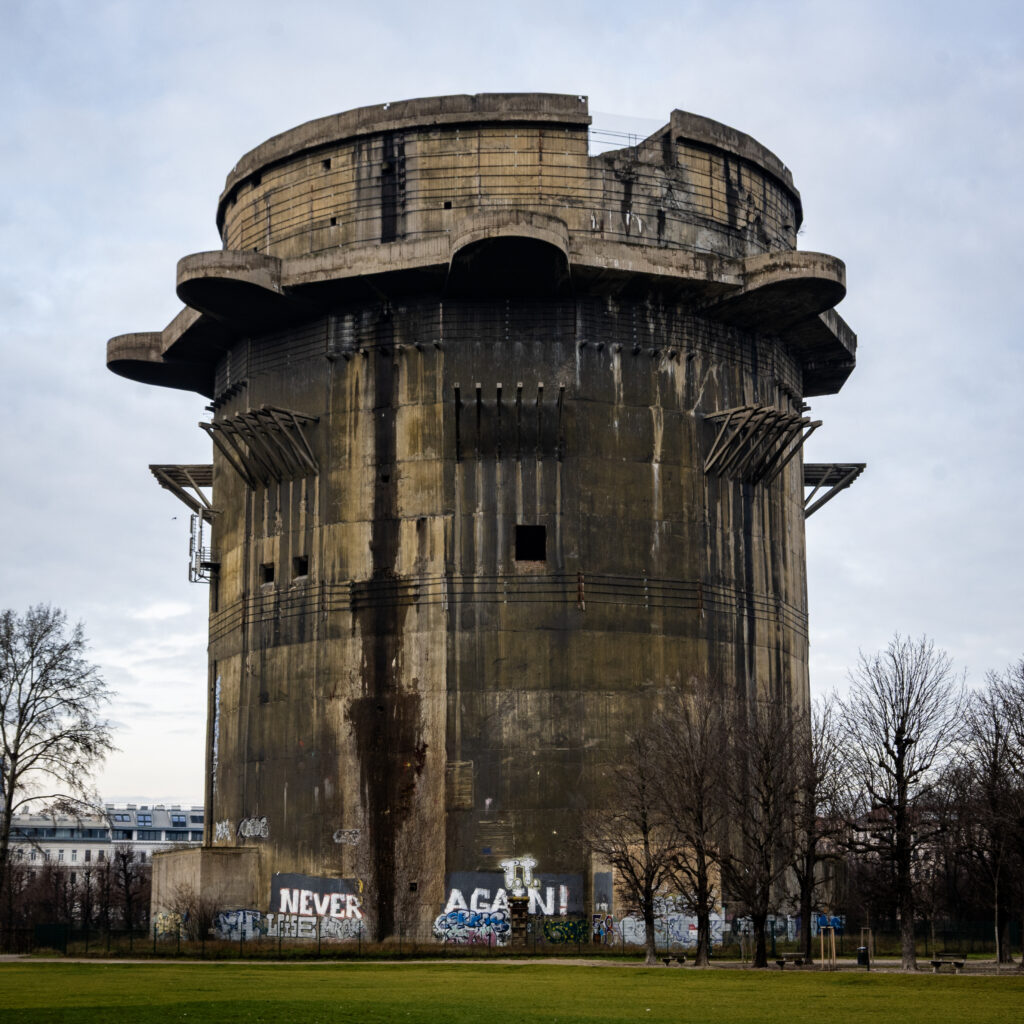
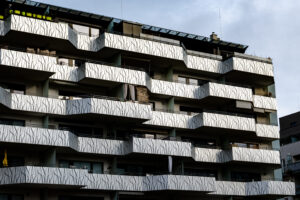
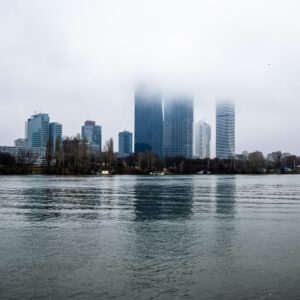
- On my last full day in the city, I took a walk out away from the city center to the banks of the Danube. Along the walk, I happened upon two of the remaining flak towers from WWII. Twins to the flak tower in Hamburg, though no longer through resemblance. Where the tower in Hamburg had been completely redeveloped into usable, urban space, the towers in Vienna had been left as a stark reminder of the war and its human costs.
- Overall, I was a little disappointed in Vienna. It didn’t really live up to the fantasy of it that Before Sunrise created in my mind. Though, on doing a little research, a fantasy version of Vienna is exactly what the film presented. The Vienna in the movie is cut up and rearranged so that the protagonists can walk down streets that don’t connect to the corners they turn around, they warp miles at a time, bouncing here and there to show the highlights of the city in a way that isn’t possible on foot. And that aligns with my feelings regarding Vienna, it’s very spread out. It’s full of beautiful sights, but it takes some serious effort to get around and see them. It lacks the tight-packed intimacy that I had expected, featuring instead wide avenues and long boulevards. Not bad things on their own, just not what I had wanted out of the city.
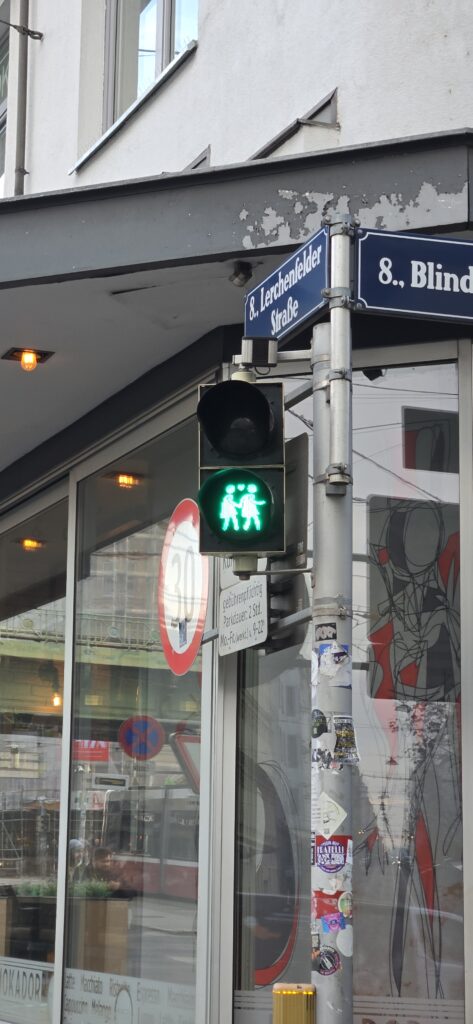
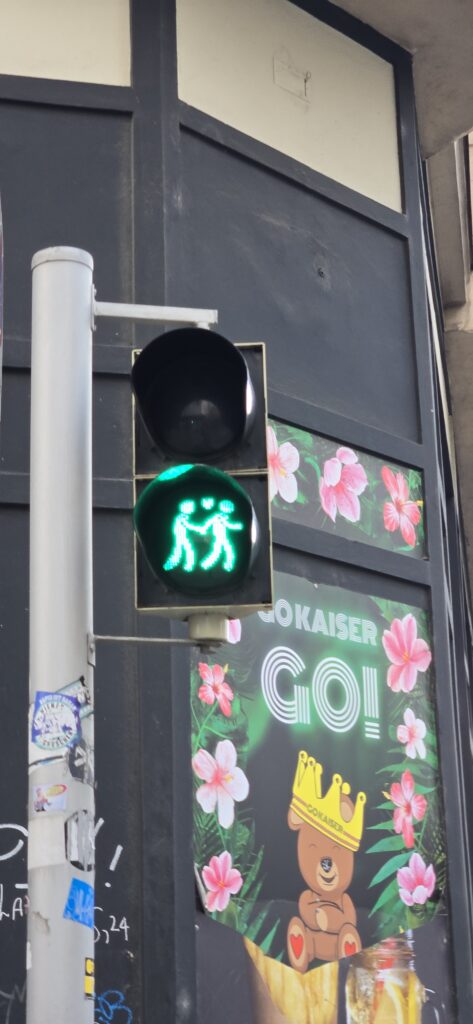
- Ending on a positive note, Vienna has these cute LGBT-friendly pedestrian signals at some of their crosswalks.
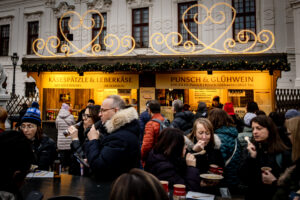
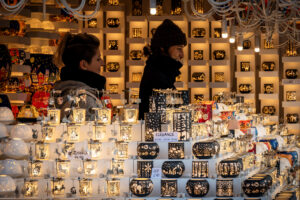
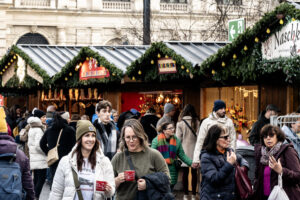
- Vienna has more than 30 Christmas markets in operation starting in late November. I made it my mission to visit as many as I could over the course of my three days in the city. Honestly, I’m not sure how many I made it to, I think it was about seven or eight. The markets themselves were fairly repetitive, so the most memorable ones were those set in fantastic locations.
-
Prague.
Dec. 1 – 5, 2025
Castles in the Fog
Due to rail maintenance, the trip to Praha (Prague) from Dresden required a bus that would carry us to a small town just over the Czechia, where we would board a train that would carry us the rest of the way. As a first taste of Czechia, I feel I could have done a lot worse than Ústí nad Labem, the town where I waited for the train. The morning was covered in a light fog that gave the surrounding hills a mystical feeling. Ústí is nestled in the Elbe river valley where it cuts through the Bohemian Uplands. I didn’t see much of the town other than the path to the train station, but already the differences with Germany were readily apparent. The baroque architecture that dotted the town was distinct from that of Germany. It’s something that is hard to describe in words, but somehow in the 60 or so kilometers that I’d come from Dresden, the world had changed around me. And now, I stood on the train platform, waiting to travel deeper into the fairy tale world in which I found myself.
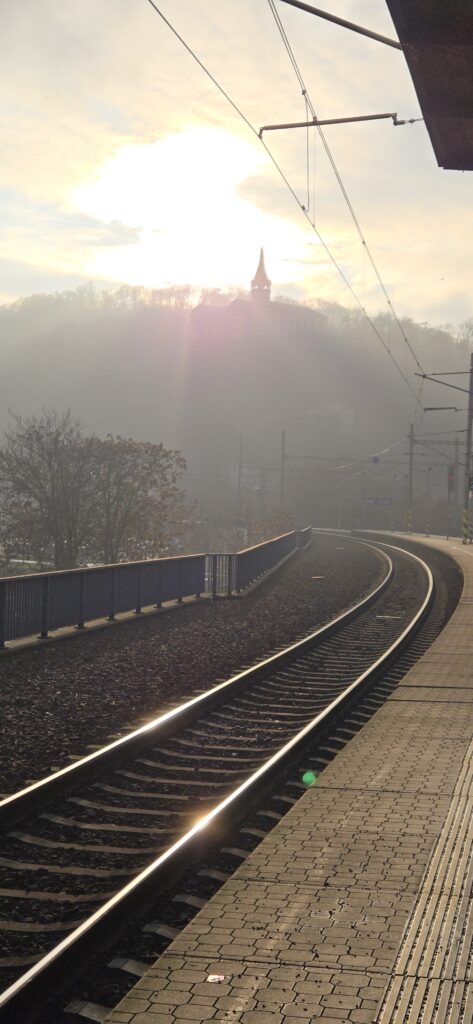
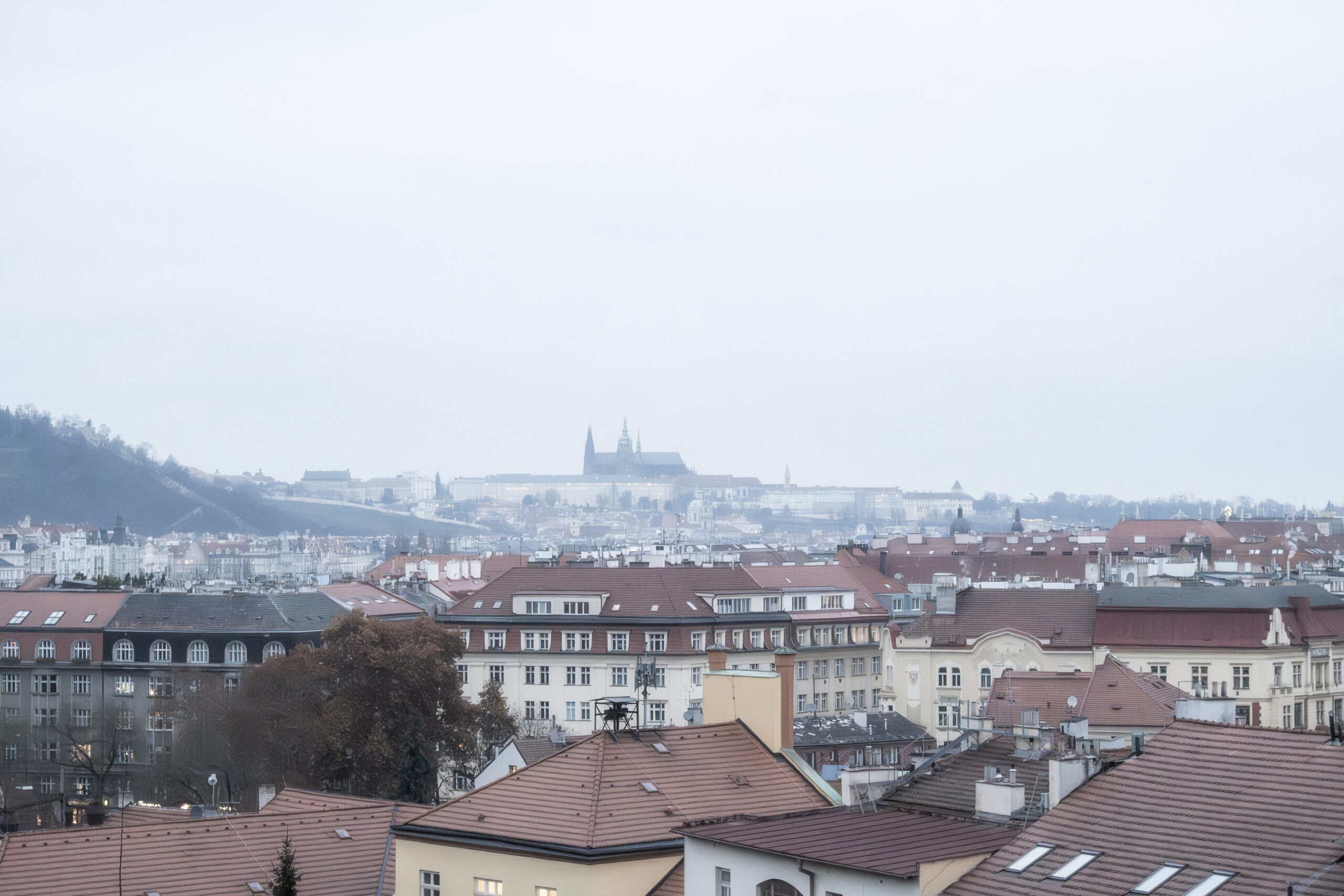
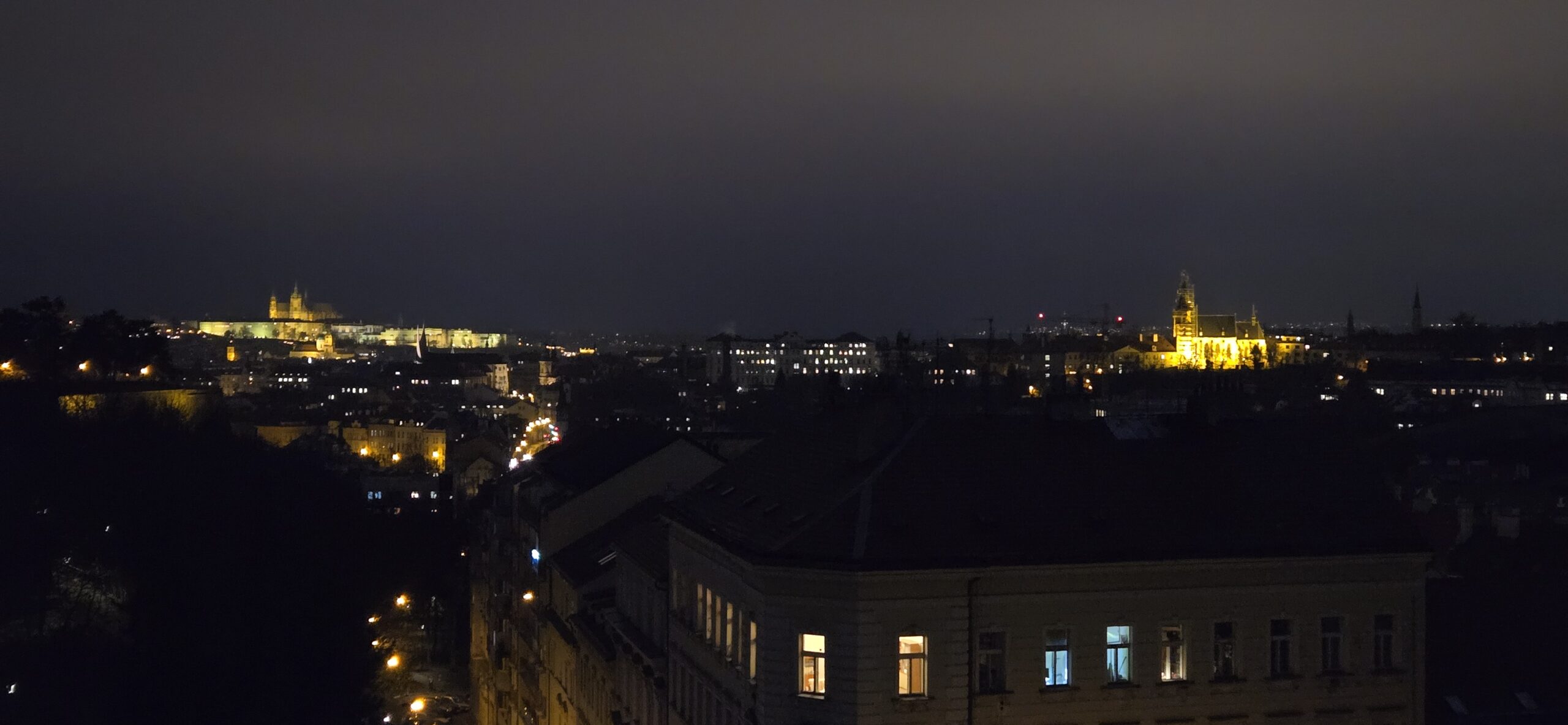
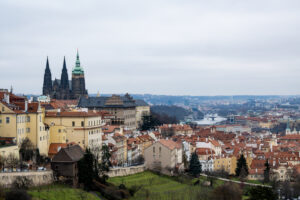
The train ride through Czechia was gorgeous, enhanced by the atmospheric fog that floated over the countryside for the length of the journey. The train eventually broached Prague over the top of a hill from which the bulk the city lay spread out below, waiting to be discovered.
Notes on Praha
- This was not one my favorite hostels, on the top floor of a five story building, my room was in the attic above even that. The room itself was fine, but was situated above the common area so that I could hear everything that was happening below. The roommates were mostly ok, though I did have a conversation with one that led to a bit of incredulity on his part that I hadn’t tried smoking opium.
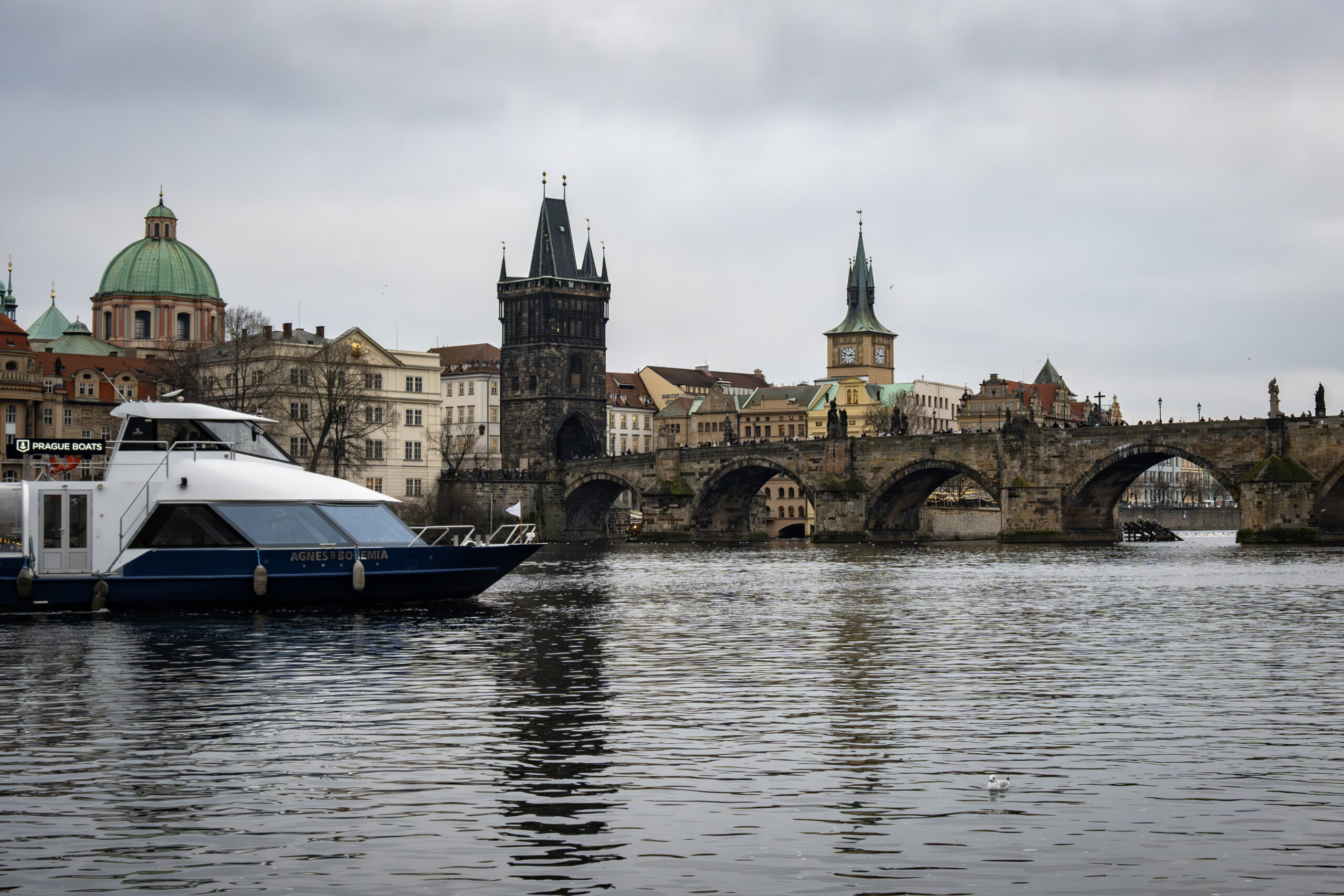
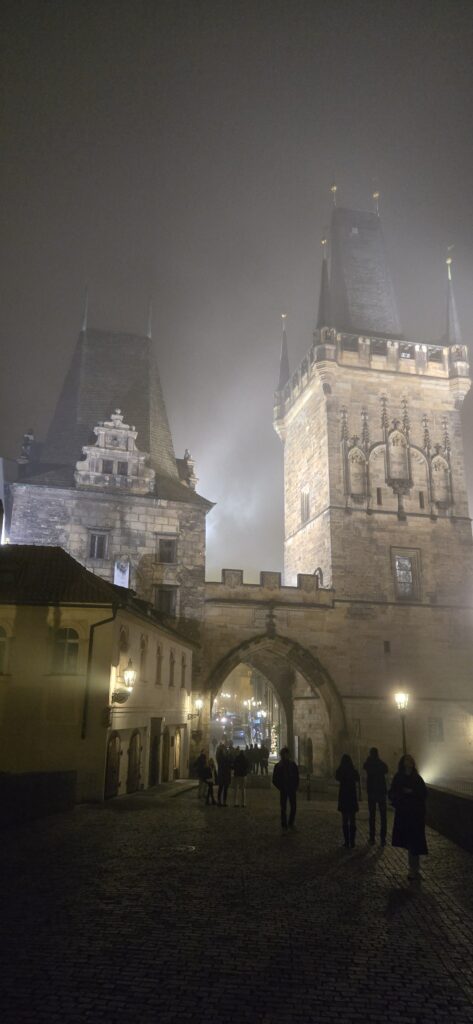
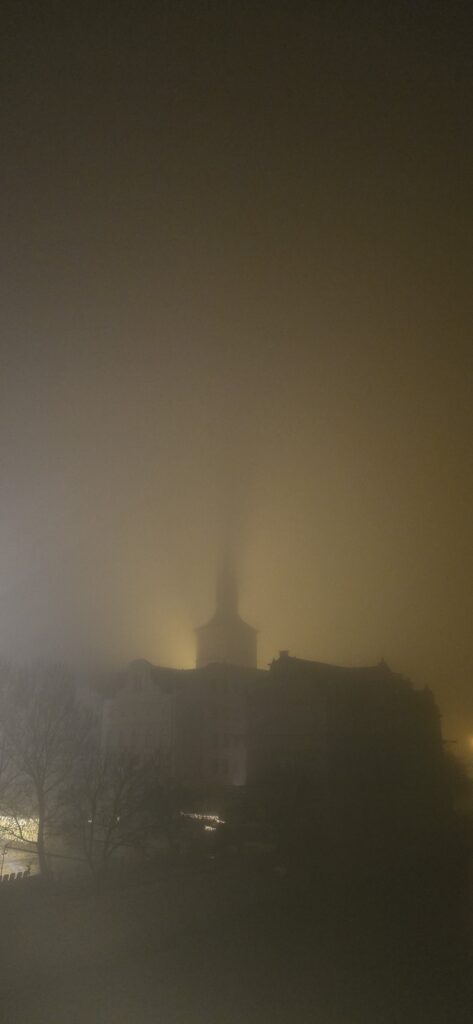
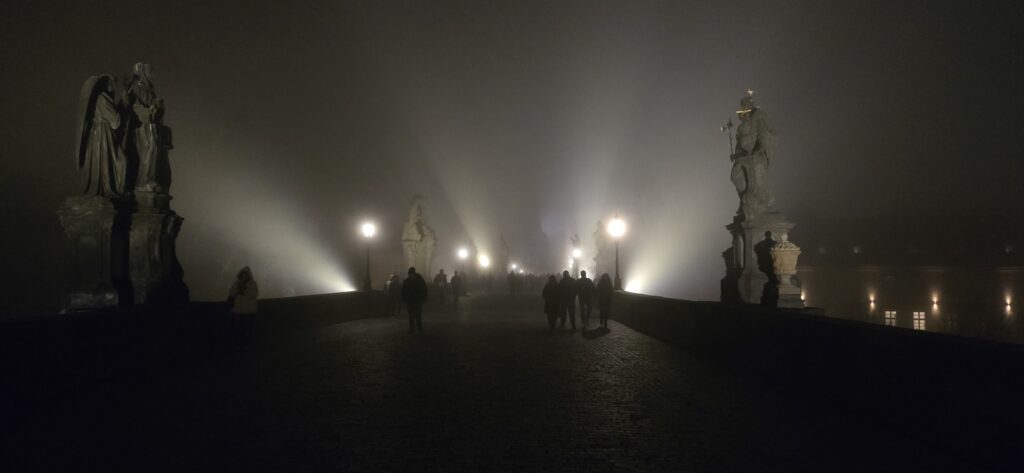
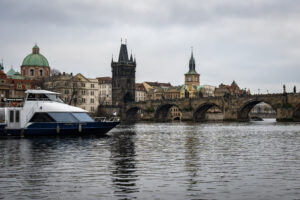
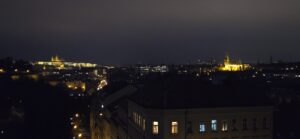
- My first night in Prague, after settling into the hostel, was rather magical. The fog from the day seemed to peak in the early evening as I was making my first explorations around the town. With everything new and the buildings so styilized and unique, I couldn’t ask for a better atmosphere to introduce me to the city. I slowly made my way to the sight that I was most looking forward to seeing, the Charles Bridge. A 14th century gothic stone footbridge over the river Vltava lined on both sides with statues of religious figures, and guarded on both ends by imposing towers. On the river, the mist intensified so that I could see nothing of the opposite bank. As I approached, the Old Town Tower revealed itself first in silohuette, looming overhead like a giant standing astride the road. It was wonderfully dramatic. Even more so as I walked along the bridge and the way ahead would slowly reveal itself to me, statues materializing out of the heavy air, and finally the towers of the Lesser town casting enormous shadows in the sky, backlit by spotlights. Magnificent, a memory to last a lifetime.
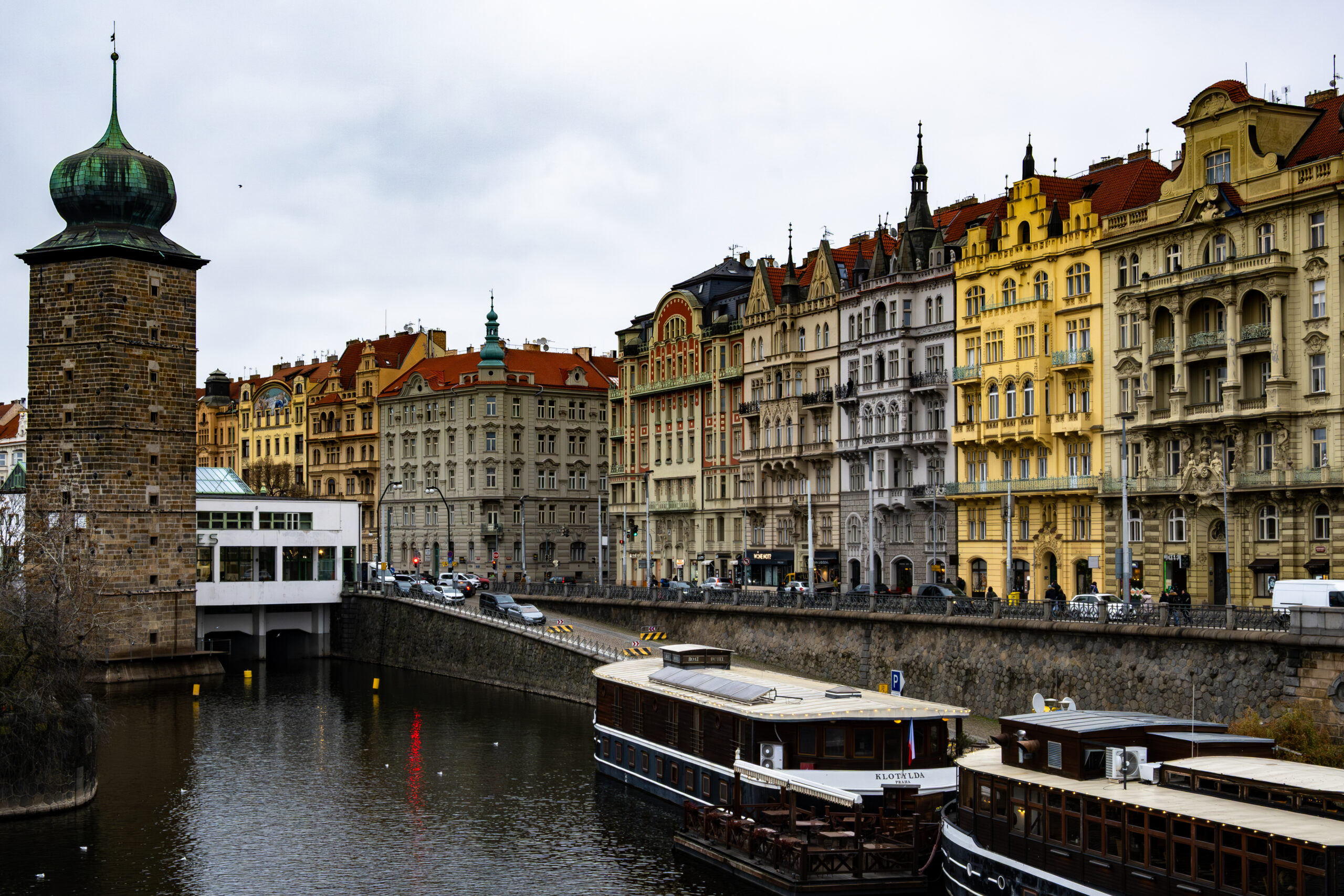
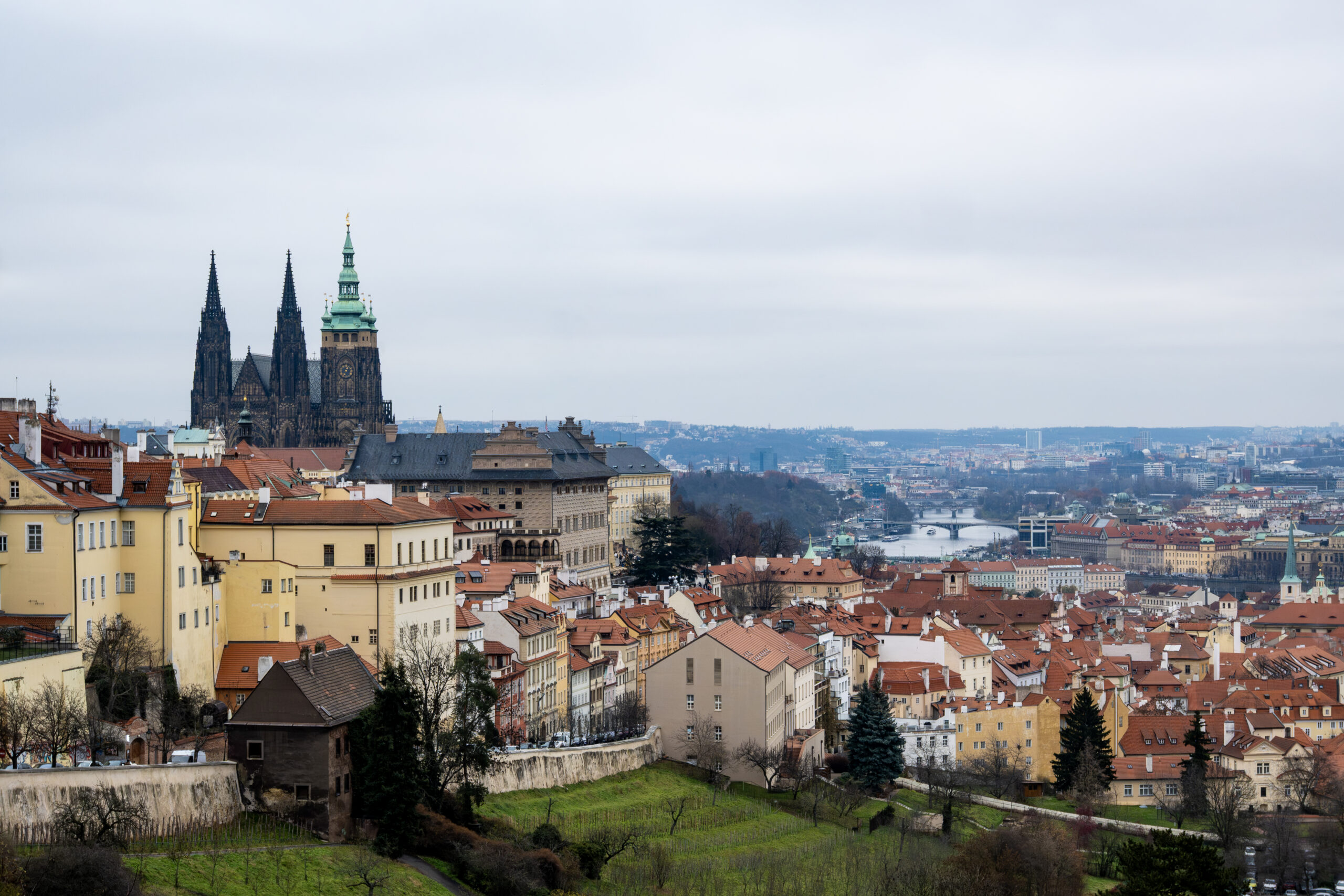
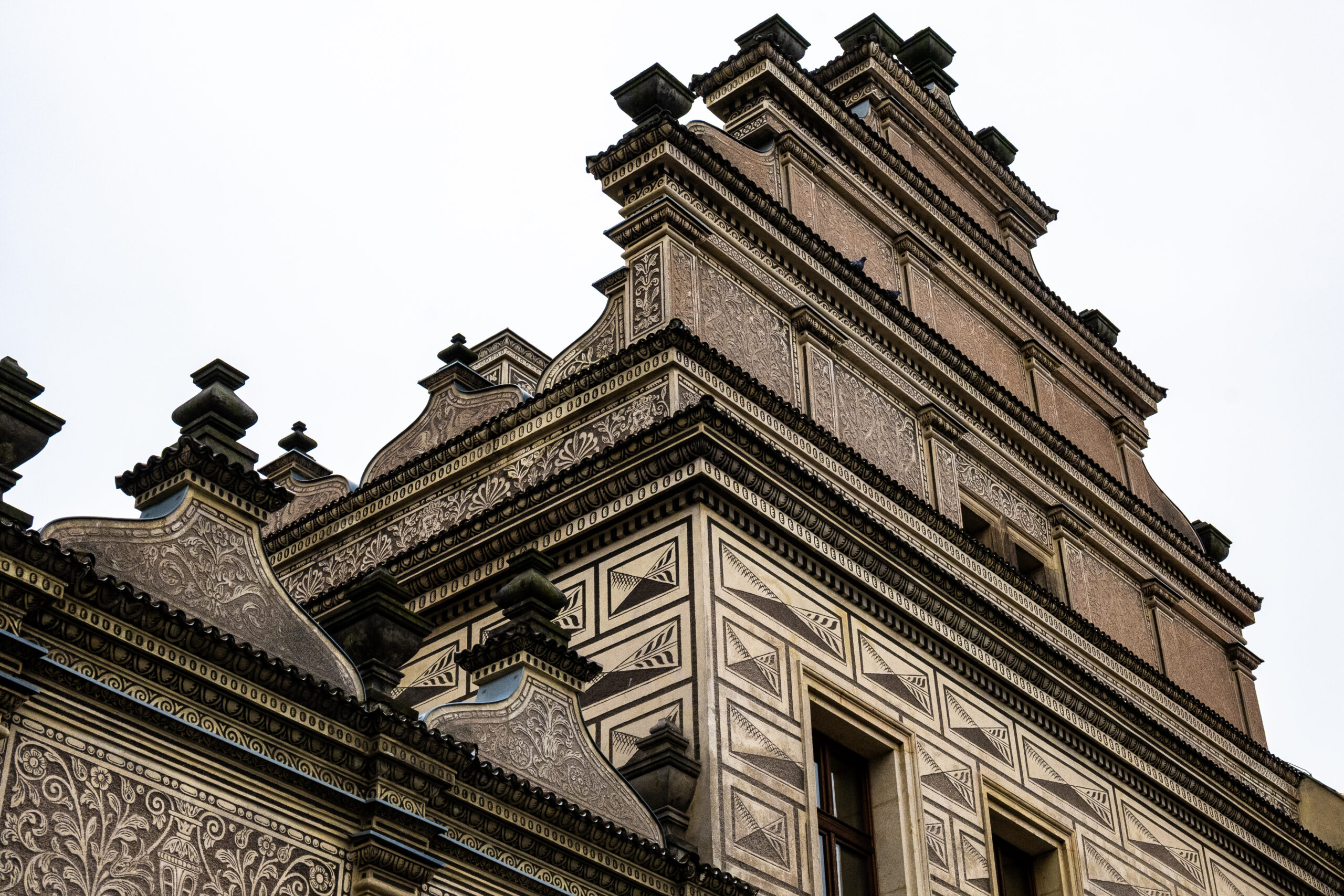
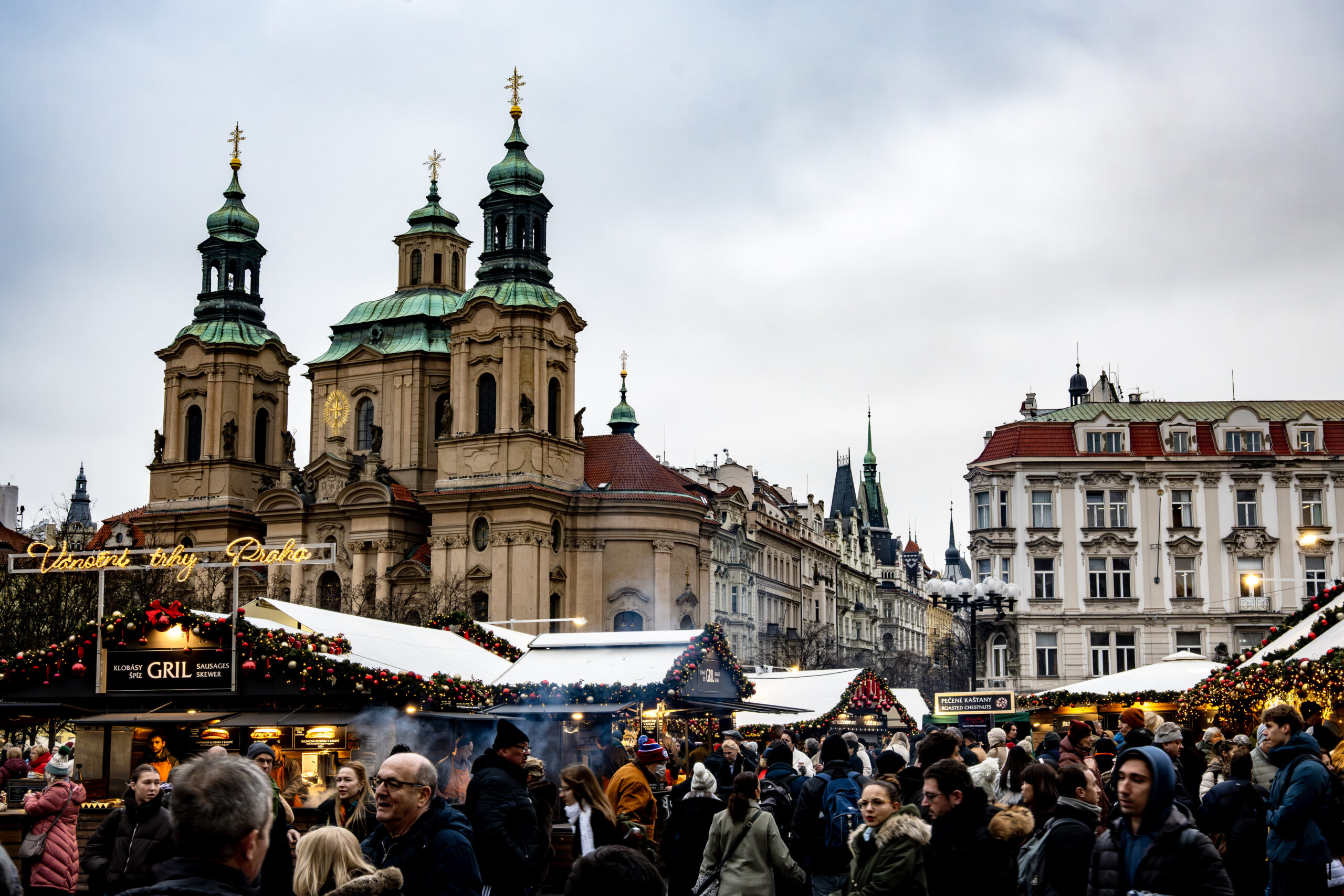
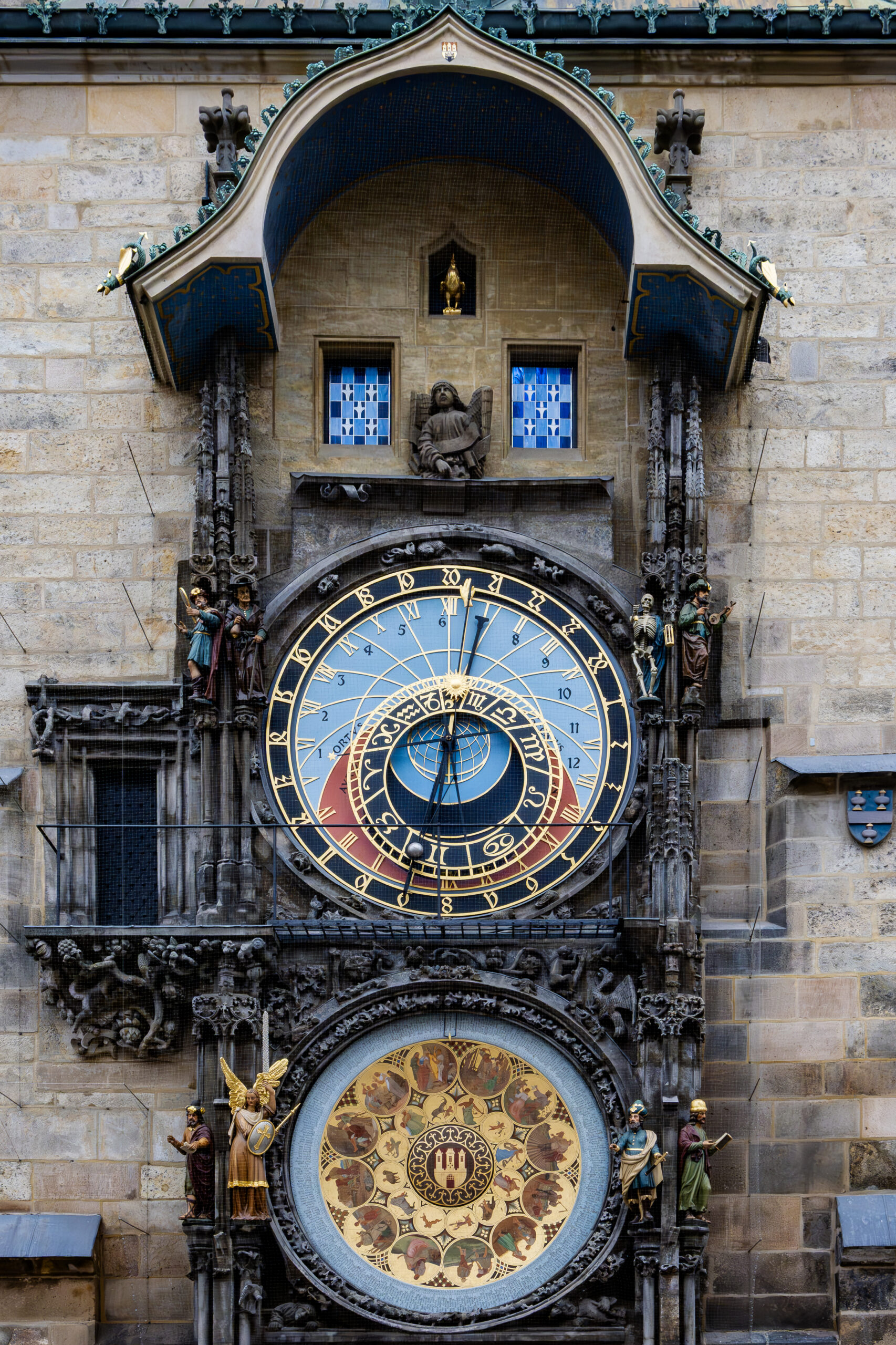
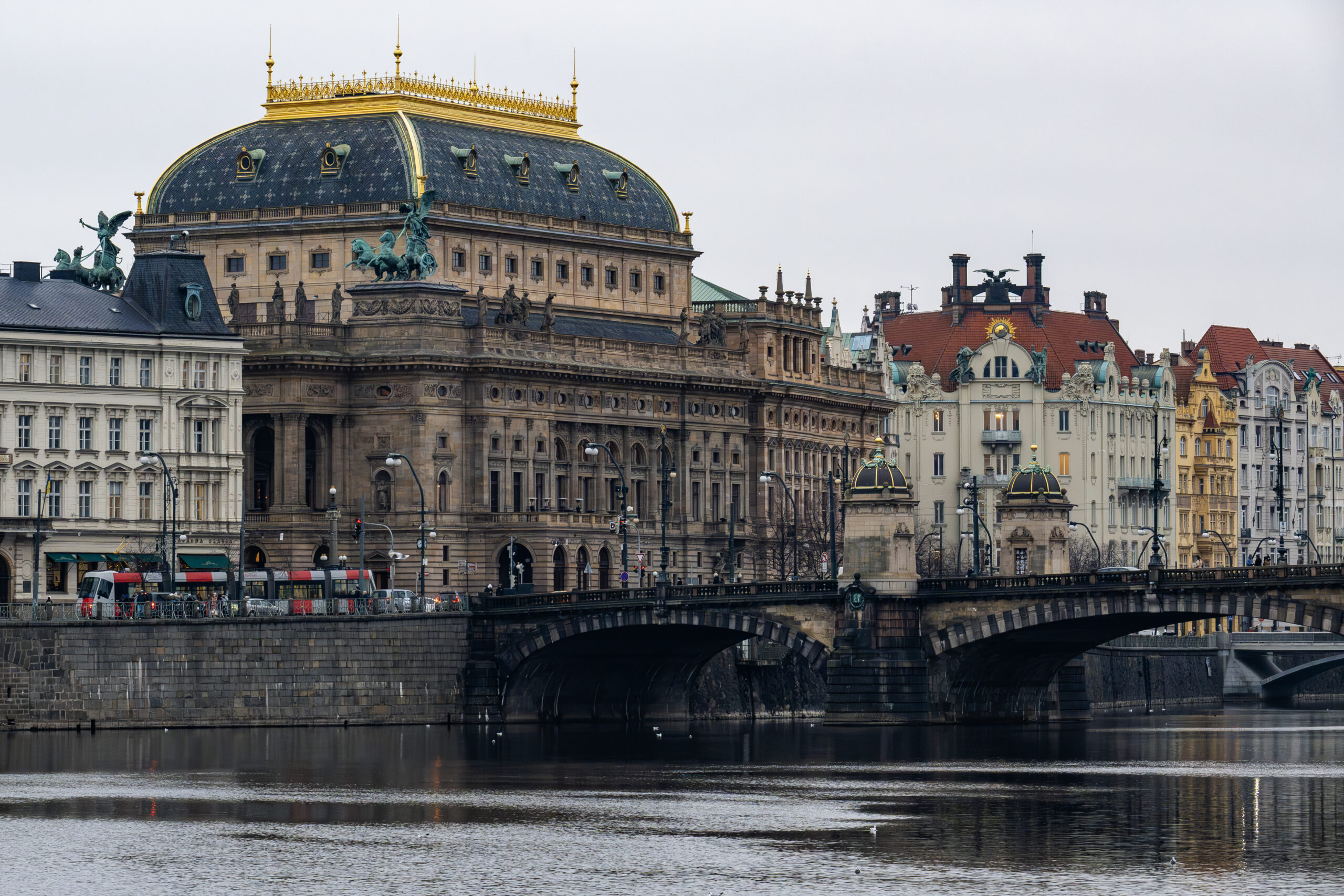
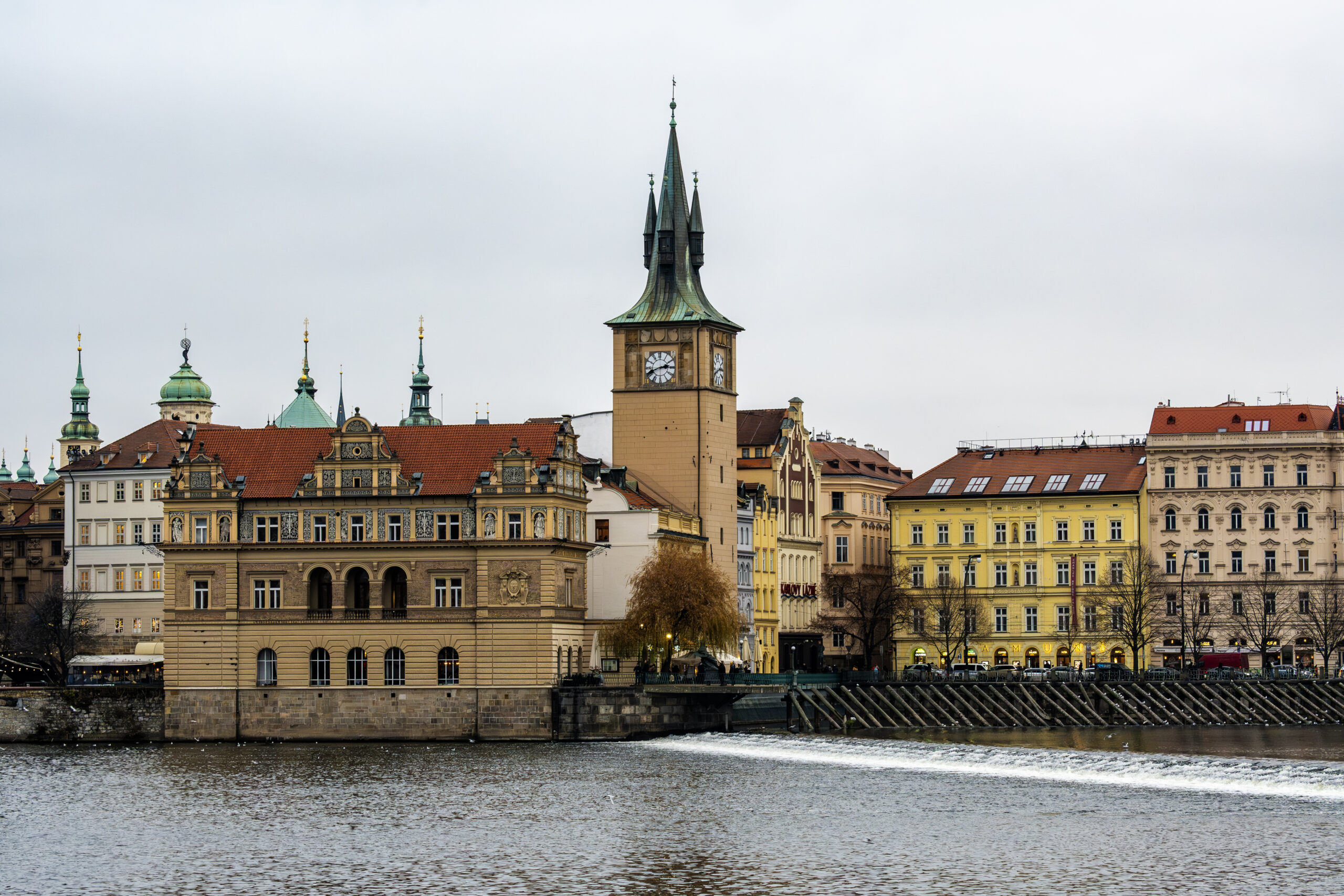
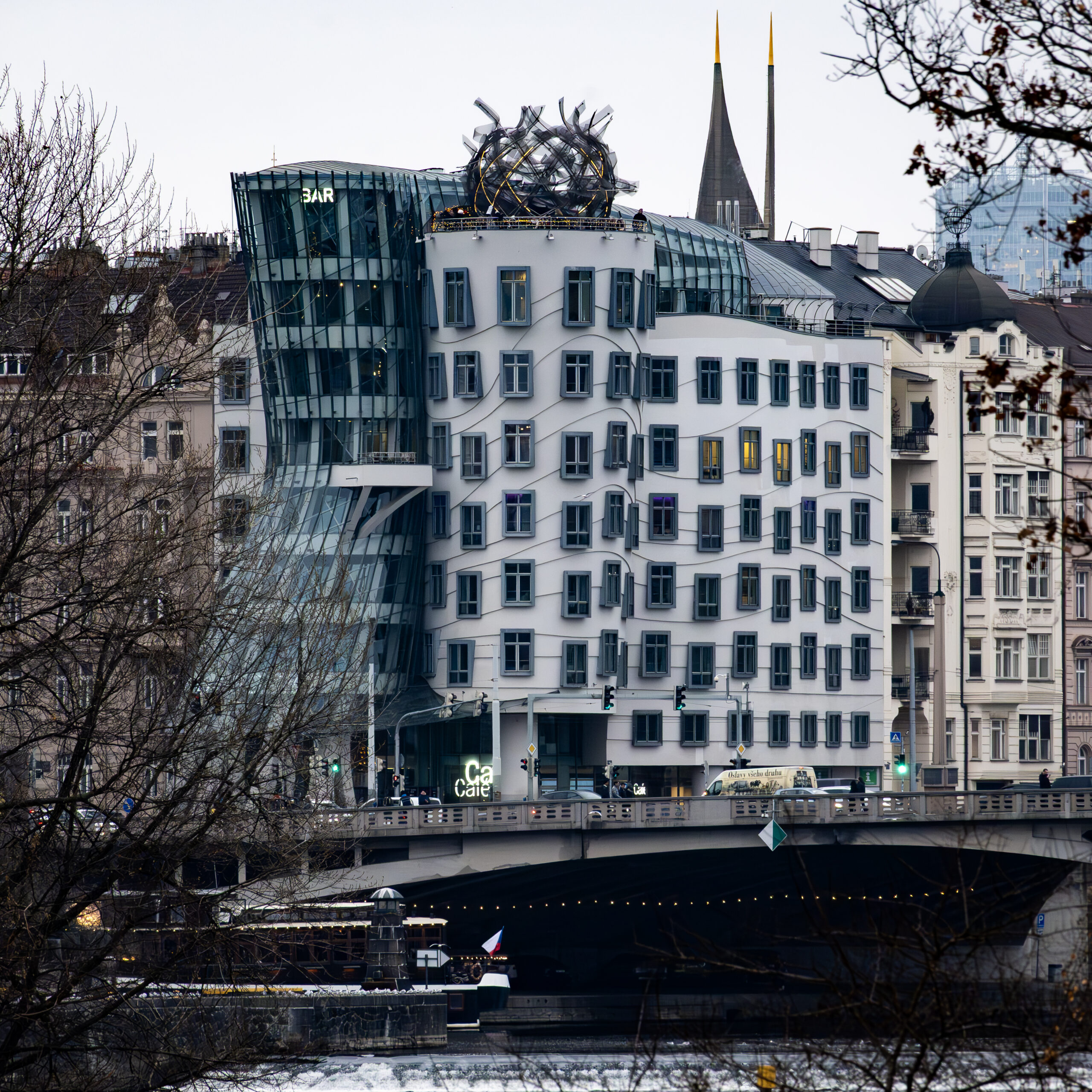
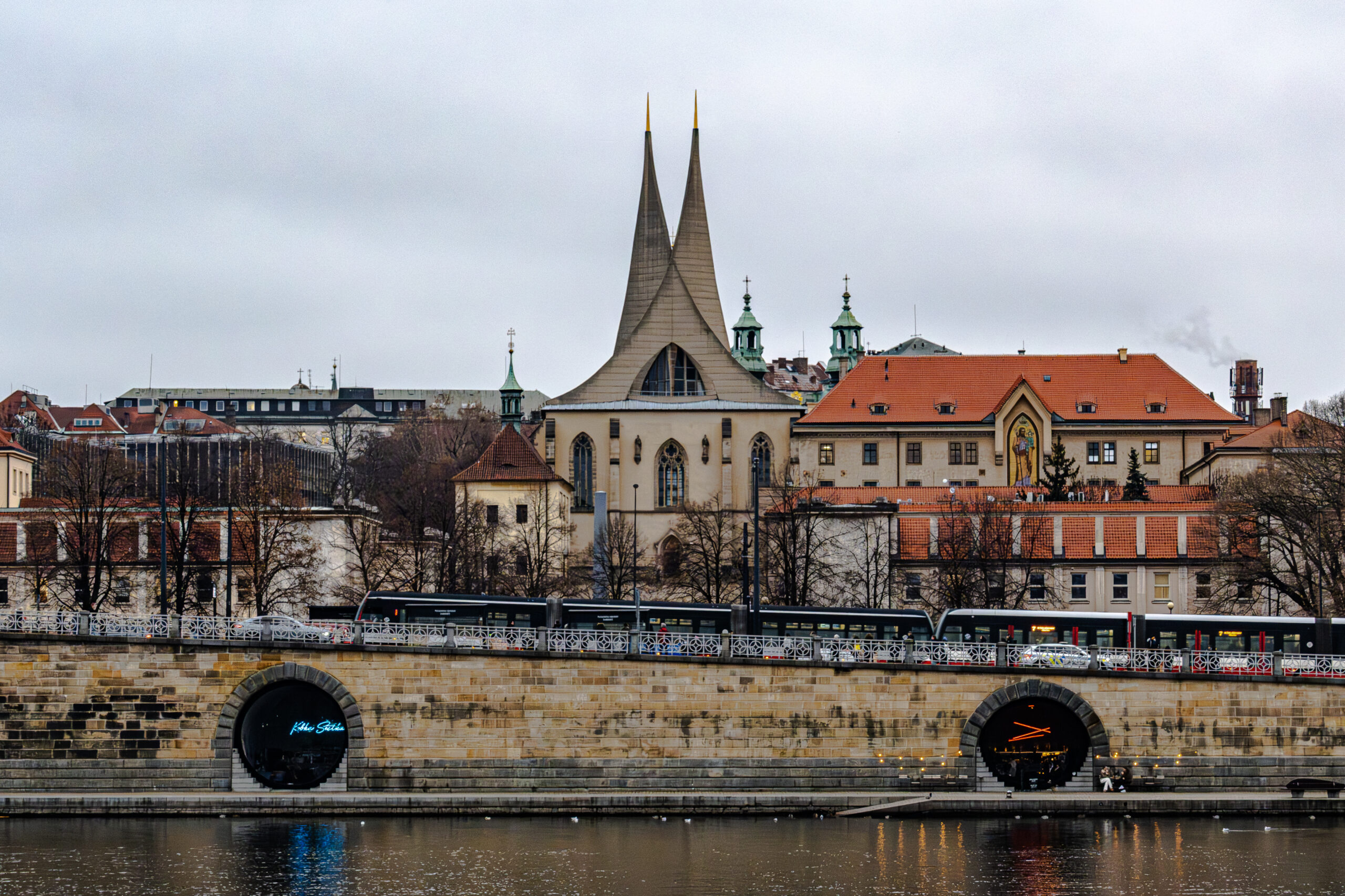
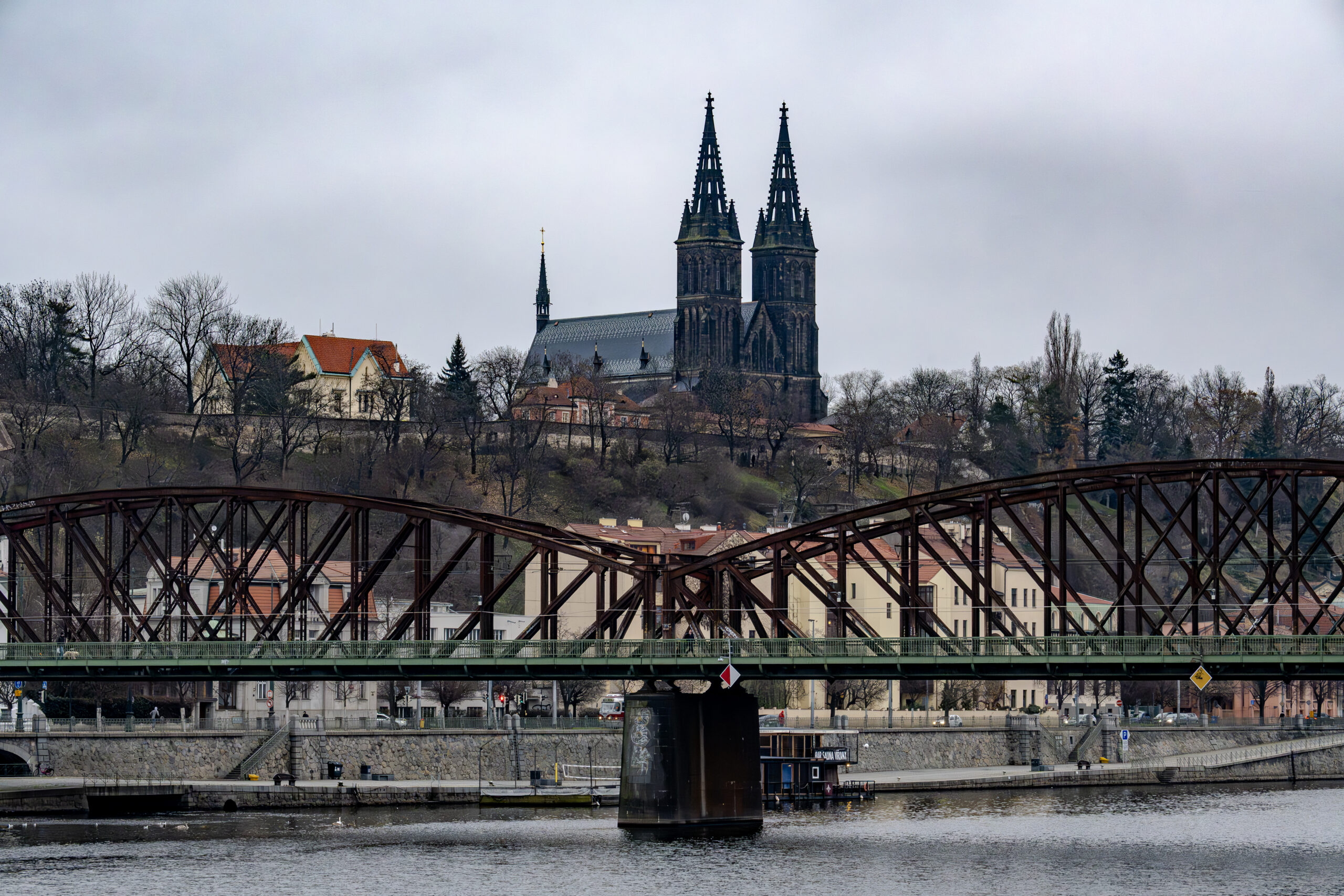
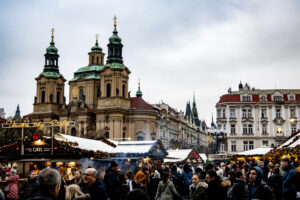
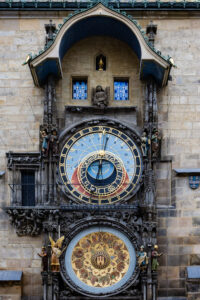
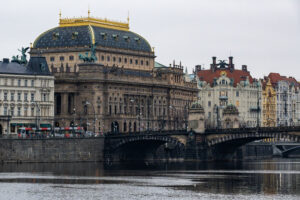
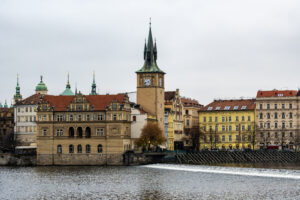
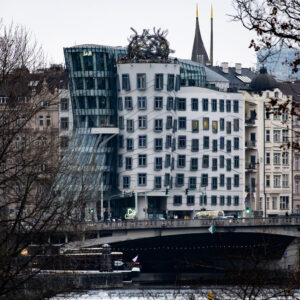
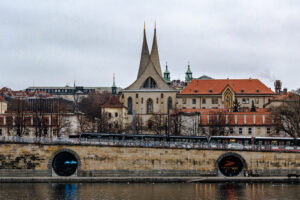
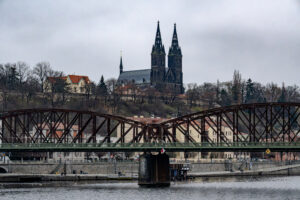
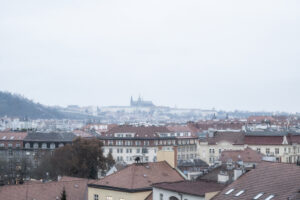
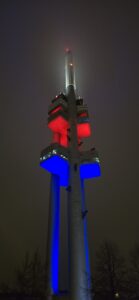
- Prague is probably my favorite city that I’ve visited, aesthetically speaking. Rather than having just a core area in the Old Town that preserves the gothic architecture of the previous centuries, a huge swathe of the city is consistently adorned. It makes the city feel romantically fairytale-esque in a way that I’ve yet to experience in another large city. There are a number of areas that amplify the gothic character, like City Hall and the surrounding Old Town Square, the massive Prague Castle complex standing high on the hill over the city, Saints Peter and Paul Basilica, also high on hill over the river, on the grounds of a former medieval fortress wrapped in an enormous wall. Everywhere you turn, there is some historical wonder waiting to be discovered. Cohesive and complete, Prague feels like a place untouched by the world outside, despite centuries of being a cultural crossroads.
- Prague was quite cold in a humid sort of way, it made my long walking days rather draining. I ate lunch while standing in the nook of a garden, because sitting on a bench would be too chilly. This, of course, was pain of my own making. I could have easily used the subway to get around or gone into shops or museums to get out of the weather. But I’d acquired, or already possessed, a certain stubborn pride that drove me to make my way on foot as much as possible.
- I took an admin day midway through my Prague visit. This turned out to be a fairly important day, as I planned the next two months of my trip. Following Prague, I would travel to Vienna, where I would spend my final days in the cold. Then, I would hop down to Greece for a couple of weeks, before I would leave just short of my allowed 90 day allotment in EU. From Greece, I would go to Bangkok where I’d take a month to rest, recuperate and adjust to a whole new continent. And finally, after a month in Bangkok, I would join the bike tour that would take me from Thailand, through Cambodia, and leave me in Vietnam, where I would pick up my solo travel again.
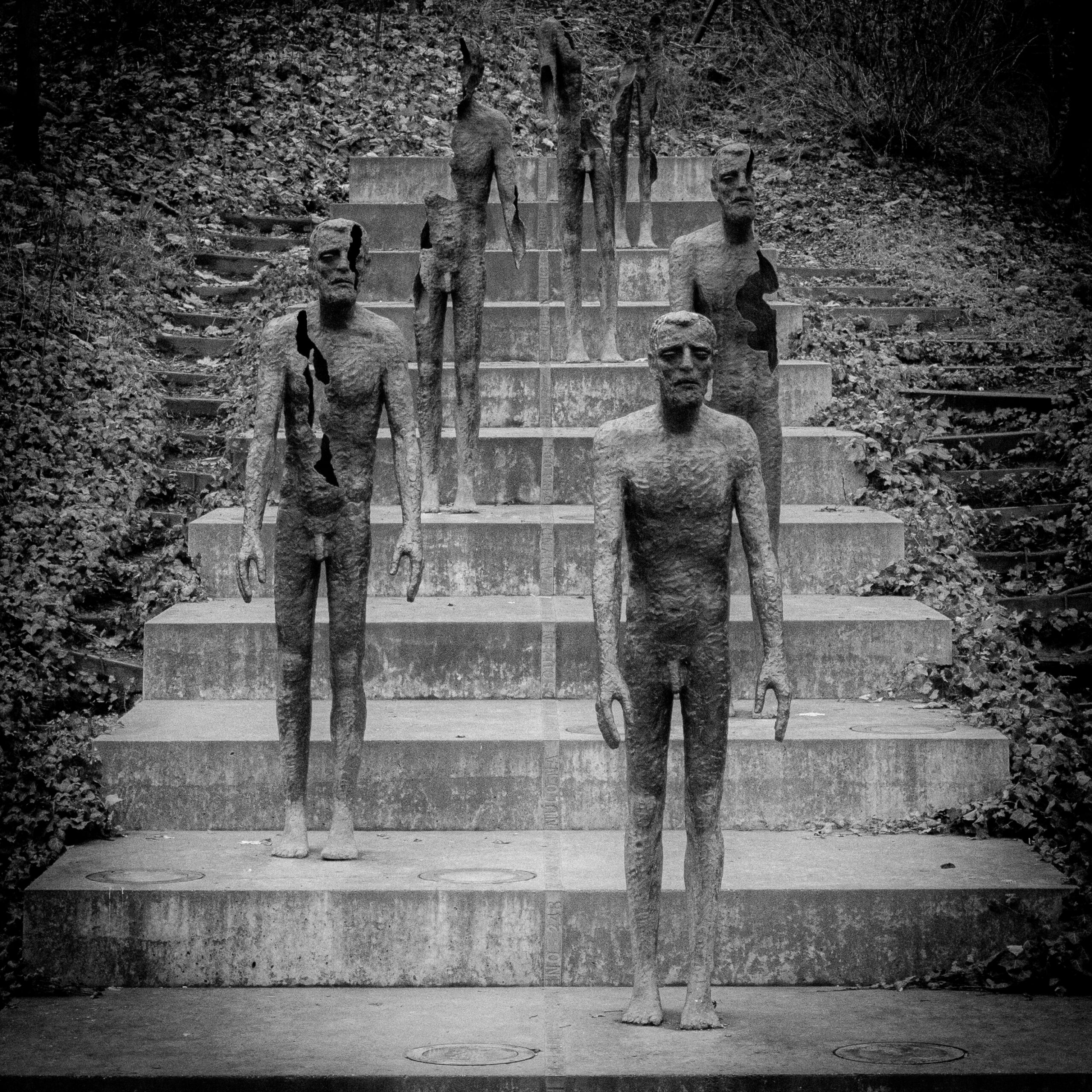
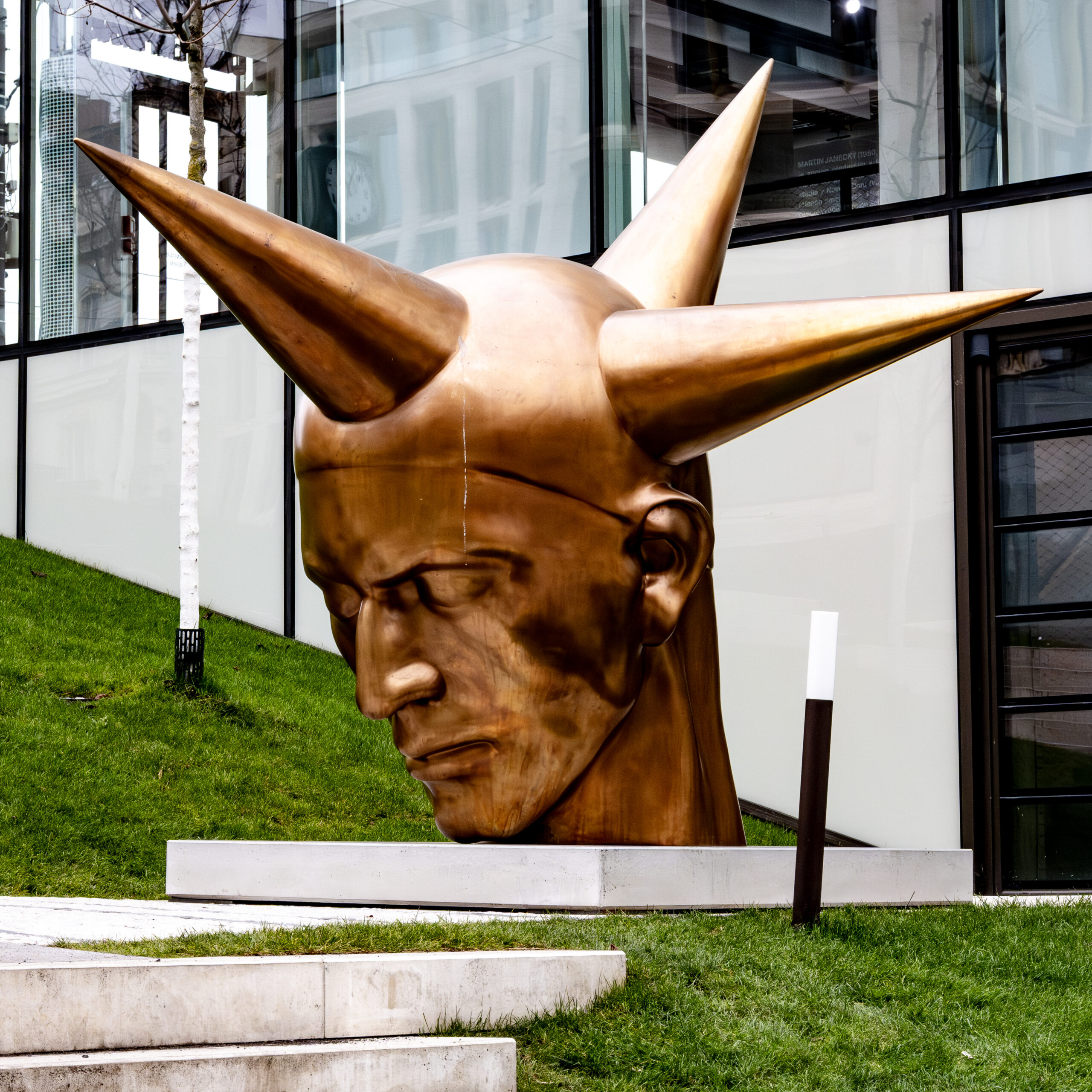
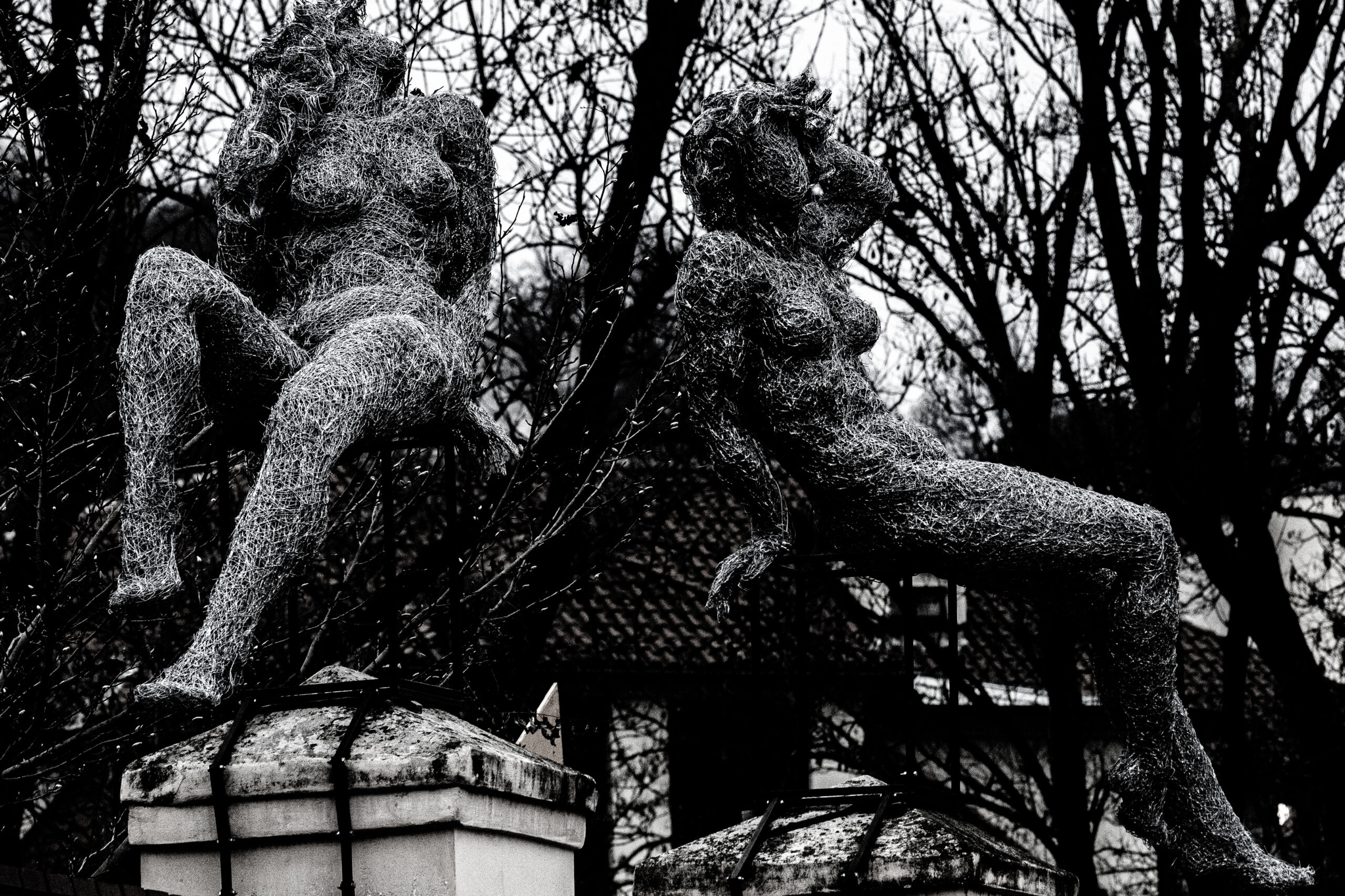
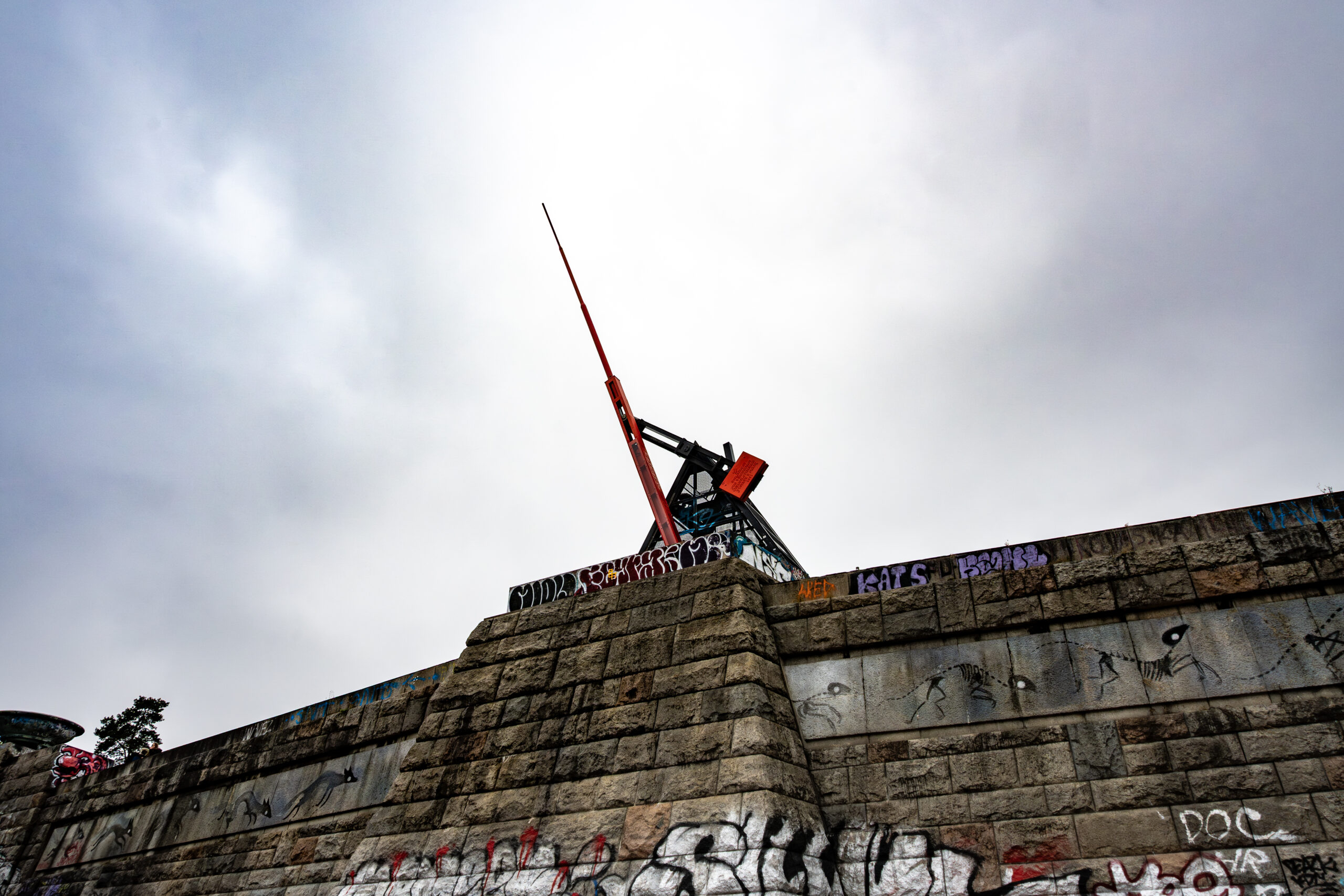
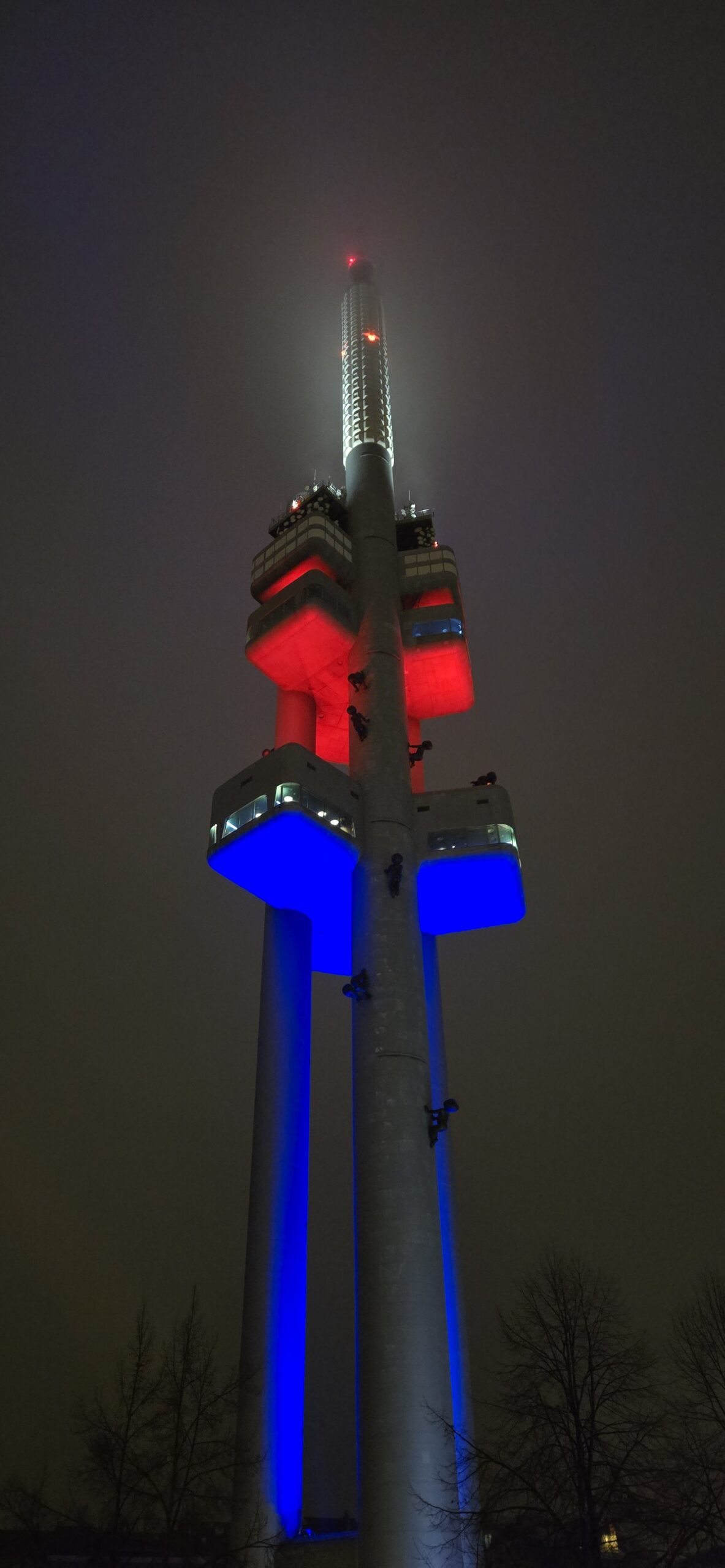
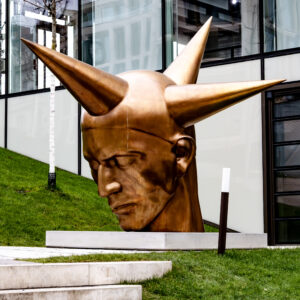
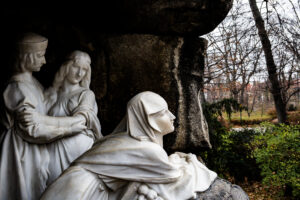
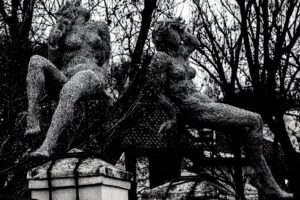
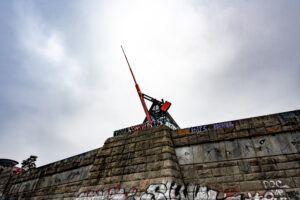
- The city is littered with art, statues everywhere you look. A giant metronome sits atop a hill overlooking the city, ensuring the pace never rushes or drags.
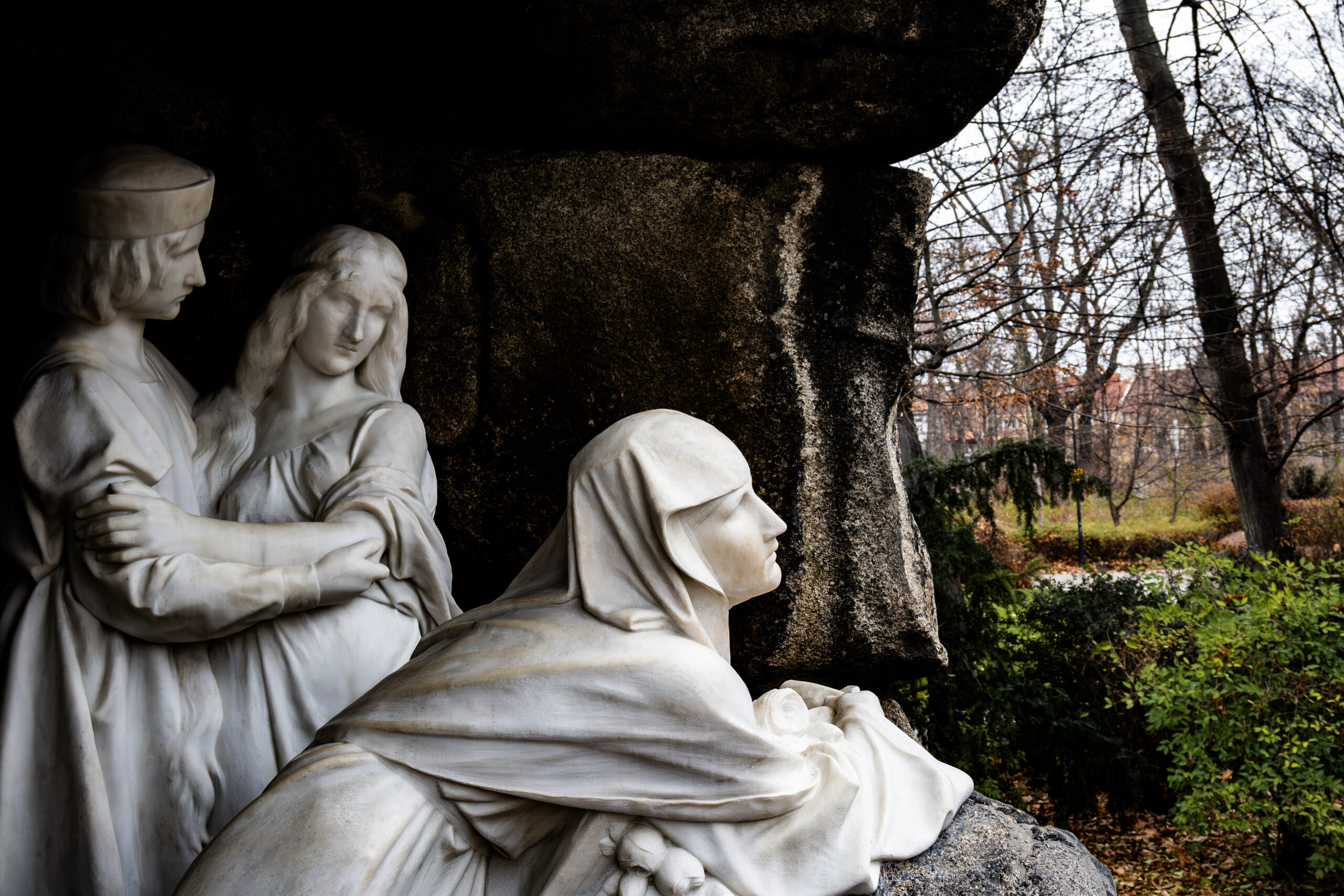
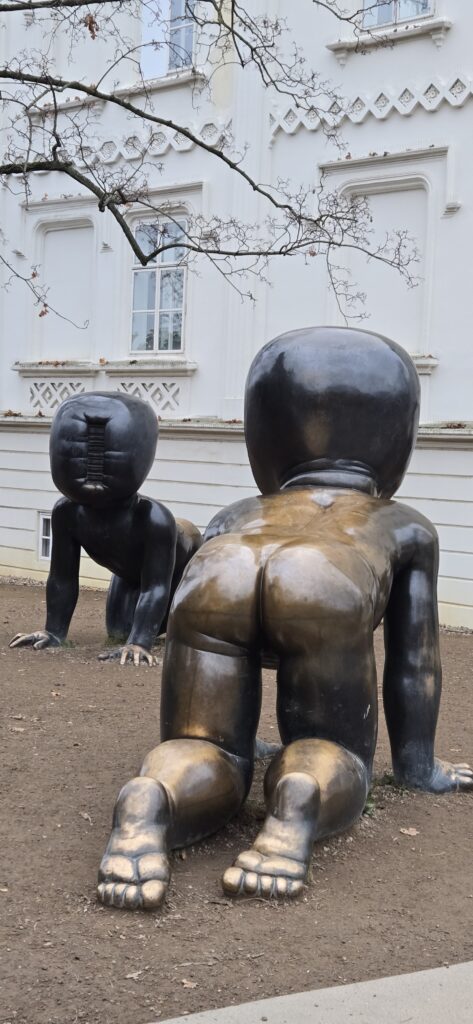
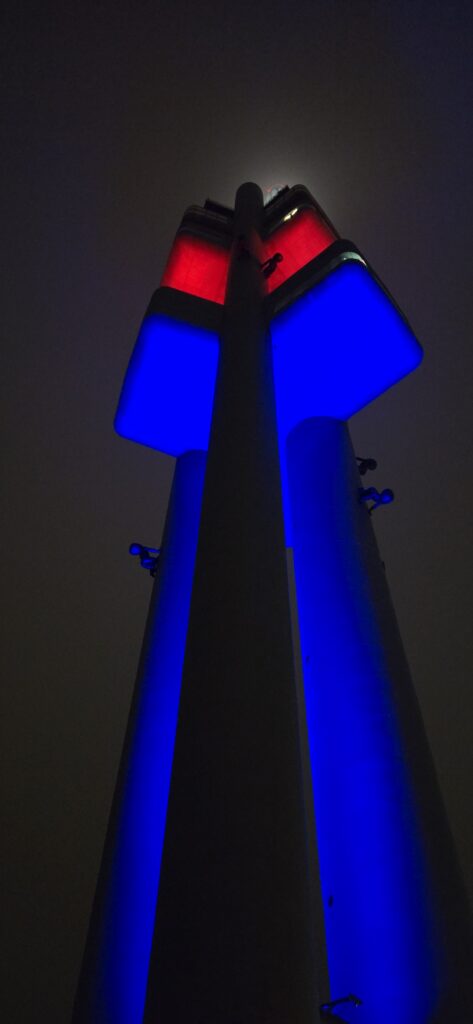
- They’ve got a weird thing for creepy, baby statues.
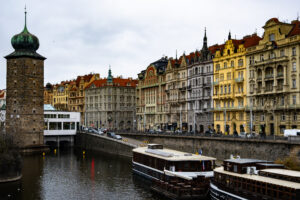
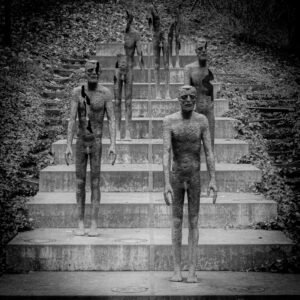
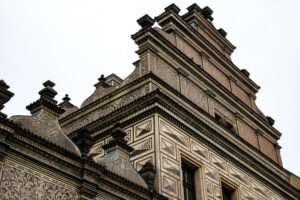
-
Leipzig & Dresden.
Nov. 27 – 30, 2025
One and Done
Greetings from Hong Kong!
In the dying days of November, I wanted to maximize the utility of ability to travel through Germany using my D-Ticket that would expire at the end of the month. So, I set my sights on Leipzig and Dresden. Two cities to the south of Berlin that would set me on course to visit Prague, Czechia as soon as the calendar changed pages. To meet that deadline, I would only be able to give each city a single day.
I didn’t have much of a conception of either city. Leipzig was just a point on the map and a name I’d heard. And, I only knew Dresden as the site of the infamous fire-bombing during WWII, as depicted in one of my favorite books, Slaughterhouse Five by Kurt Vonnegut. Otherwise, they were complete mysteries to me. But, I intended to make them less so.
Leipzig
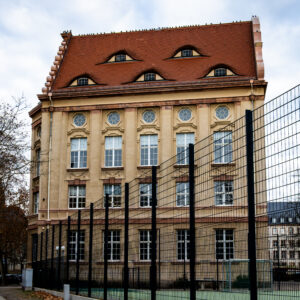
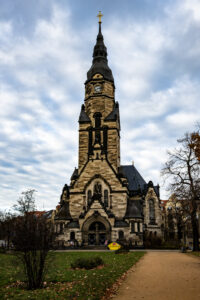
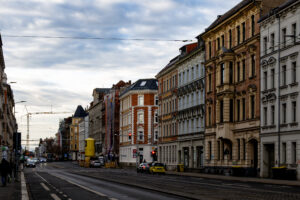
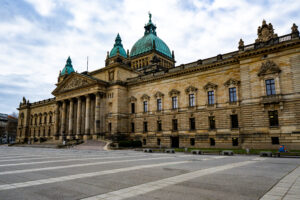
- Not to totally give away the plot, but I didn’t really like Leipzig all that much. In the city’s defense I know that I need to spend some time with some places before I start to understand their charms, and Leipzig didn’t get afforded that opportunity.
- I arrived in the mid-afternoon and headed directly to my hostel, which was located outside of the city center in a kind of grungy part of town. The hostel itself was fine but by the end of my time there I had some interesting experiences.
- I ate breakfast while listening to another guest speak openly to their mistress on speakerphone in the kitchen. How did I know it was his mistress, multiple references to his wife and how he was a bad husband. Not that he seemed to feel particularly guilty.
- One of my socks went missing when I handed my laundry to the staff to be washed. It didn’t turn up even after I had them check for it twice. As I had a limited number of pairs, I eventually replaced the missing set when I was in Dresden, though I had to buy a pack of five to do so. It was only after doing so that I found the missing sock inside one of my clean t-shirts. Whoops.
- Someone stole the sliced turkey and cheese that I left in the fridge and intended for my lunch on my way to Dresden.
- I eavesdropped on a couple in the hostel bar that were talking about the guy’s job. From what I heard, it sounded like he was a pilot and that they, the couple, had been recently wed. They also had English accents. Oddly enough, these points well enough with my recent brother-in-law’s brother, who I hadn’t yet met that I needed to check. It wasn’t him. But we all had a good laugh.
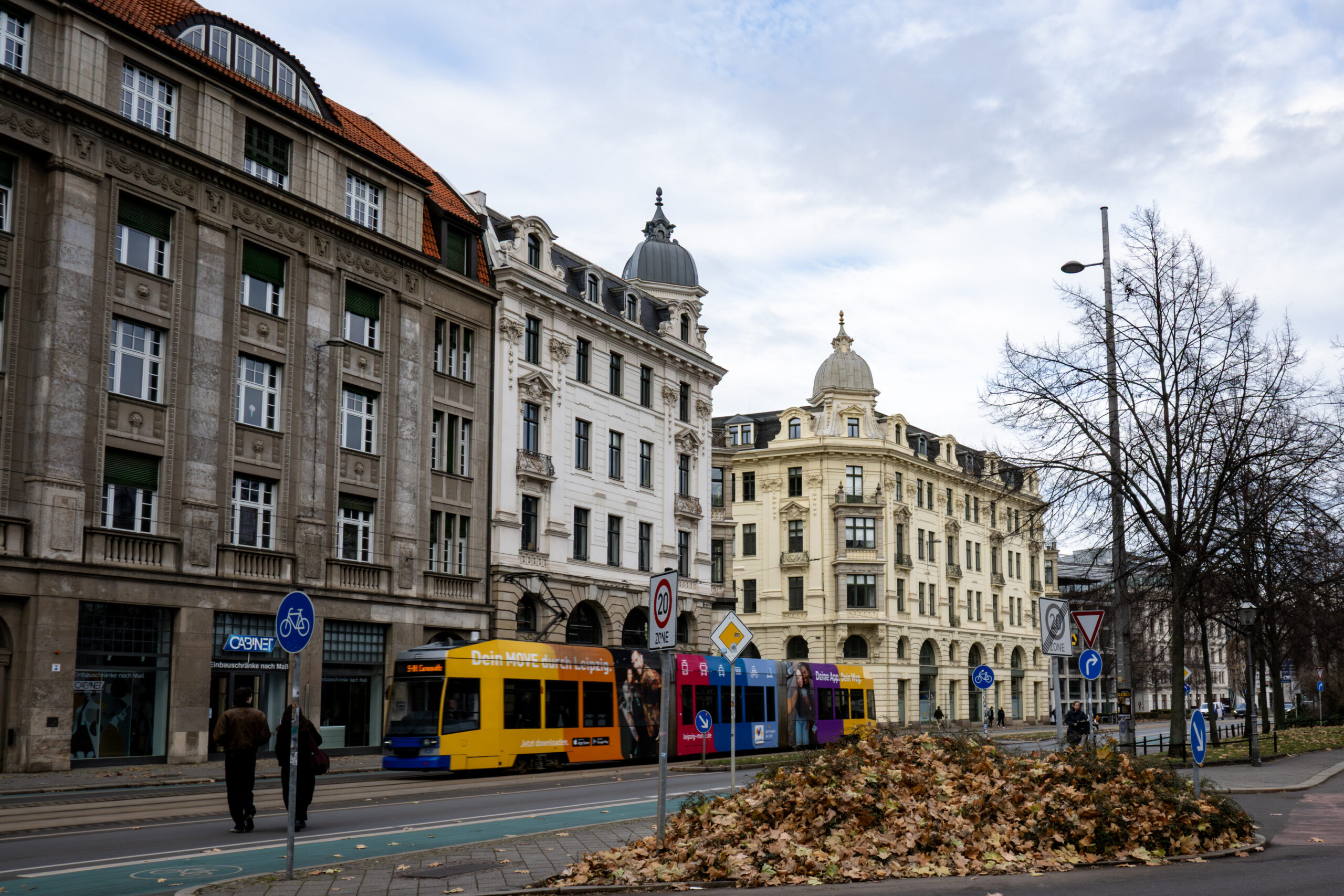
- The day appointed for my exploration for Leipzig was relatively warm, at least compared to my time in Berlin, but it was grey, overcast and dark, with the sun struggling to climb in the sky as winter drew closer.
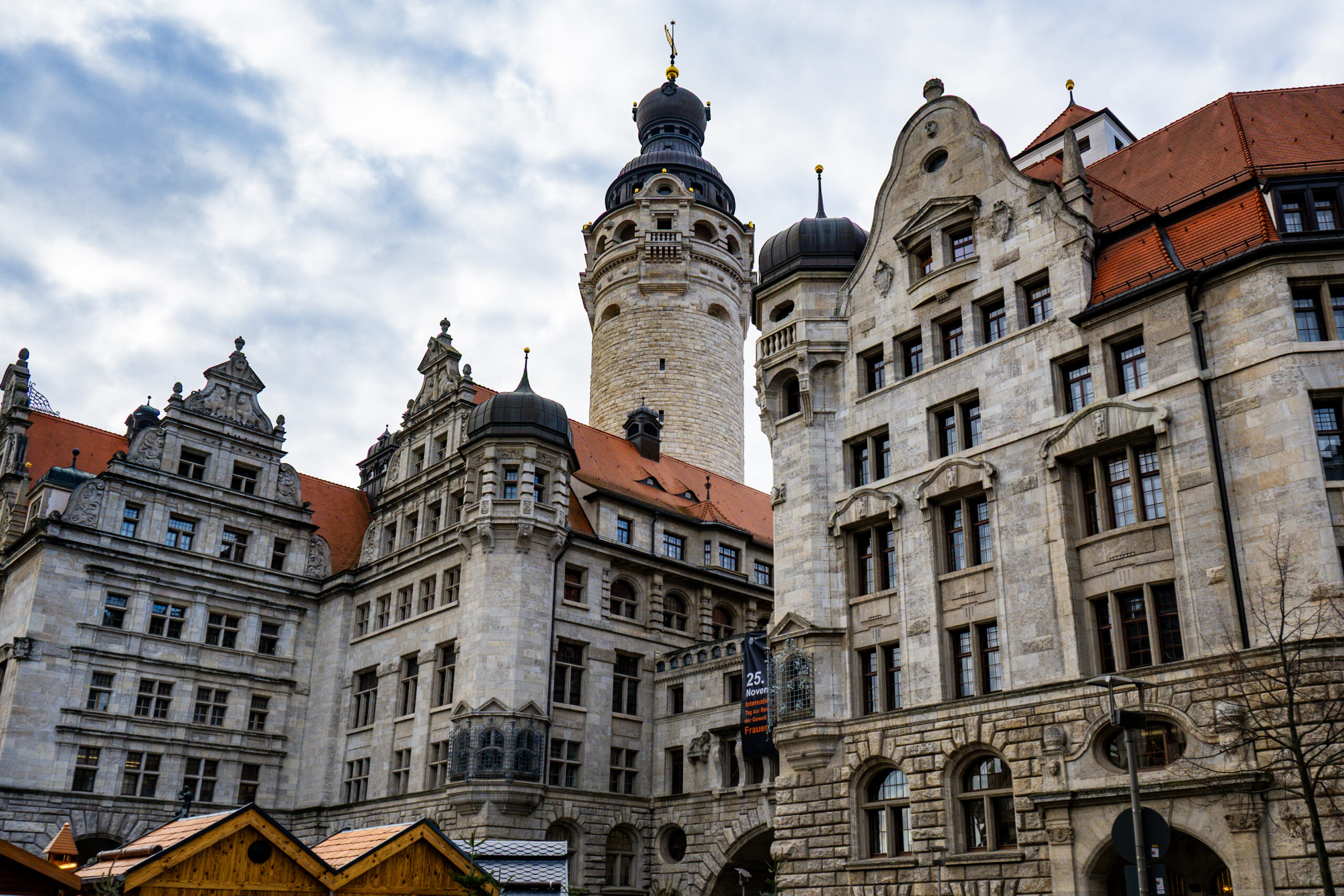
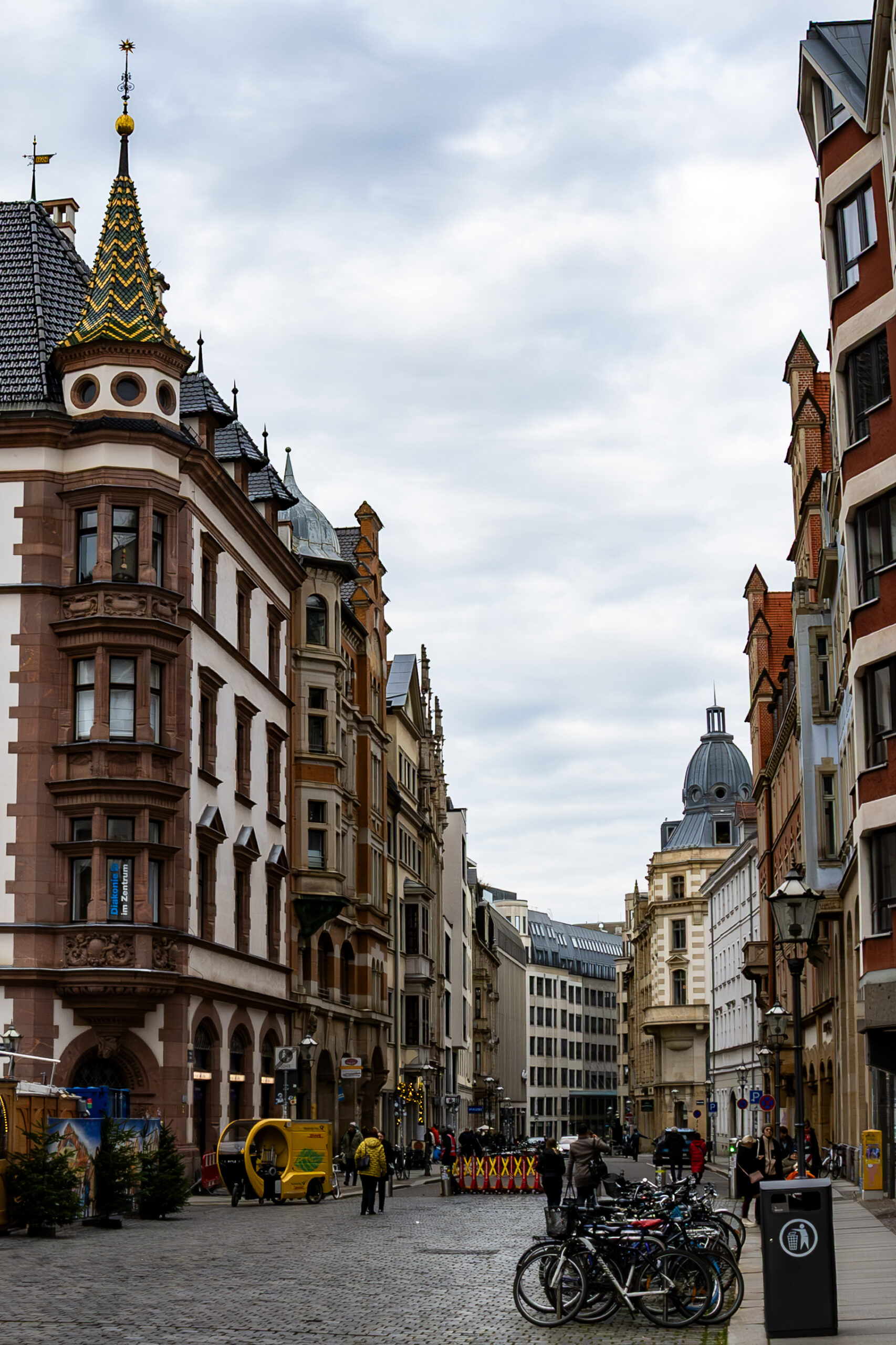
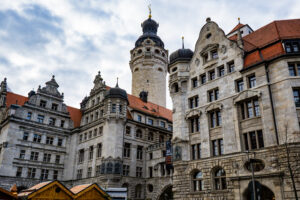
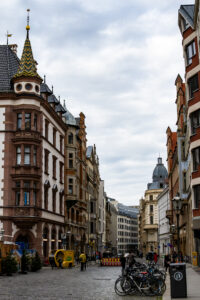
- I started my wandering at the Neues Rathaus (New City Hall), a beautiful building built at the turn of the 20th century in a revival style that was somewhat unique in my experience of German architecture. It features a ‘Rapunzel’ tower at the center of the building complex, an ode to the older Pleissenburg building that once stood in the same place. The walk leading to the square at the foot of the building is striking, giving the impression of walking through the gates of a massive medieval castle as you pass under the arched bridge that connects City Hall to the adjoining registry office.
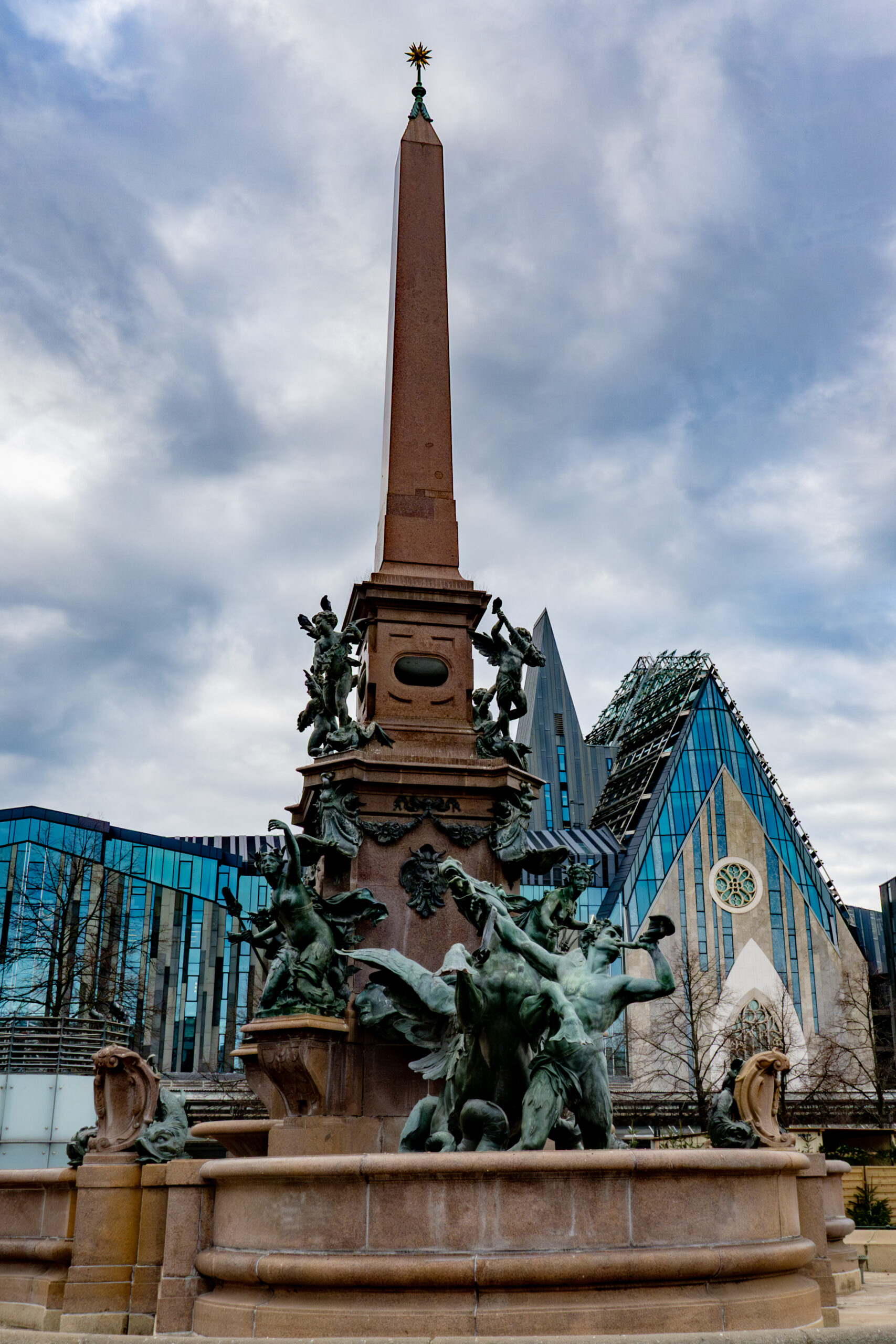
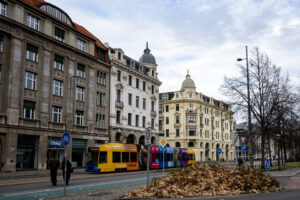
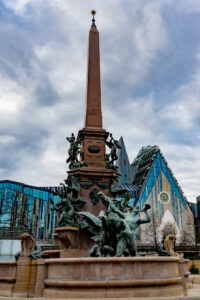
- The remainder of my wandering was largely uneventful, as I chose a path out of the city centre that turned out not to yield much fruit. Turning back, I made my way through the campus of the University of Leipzig and particularly to Augustusplatz. This square is surrounded by a fascinating combination of new and old buildings. Many of the historical buildings were destroyed during WWII, leaving the Cold War GDR government to change the face of the square. On one end of the Platz is the Leipzig Opera House a stately, if understated, socialist neo-classical building. Directly opposite, and standing in stark contrast, is the Gewandhaus, a concert-hall built in socialist modernism-brutalist style, all glass, steel and concrete. Rounding out the architectural curiosities is the Paulinum. Once Paulinerkirche (St. Paul’s Church), destroyed under the East German regime, the Paulinum is now a secular university building raised in 2007. It preserves its history with a front facade representing the old church. While the silhouette of the structure recalls a cathedral sheathed under glass and steel, as though placed under a bell jar for protection.
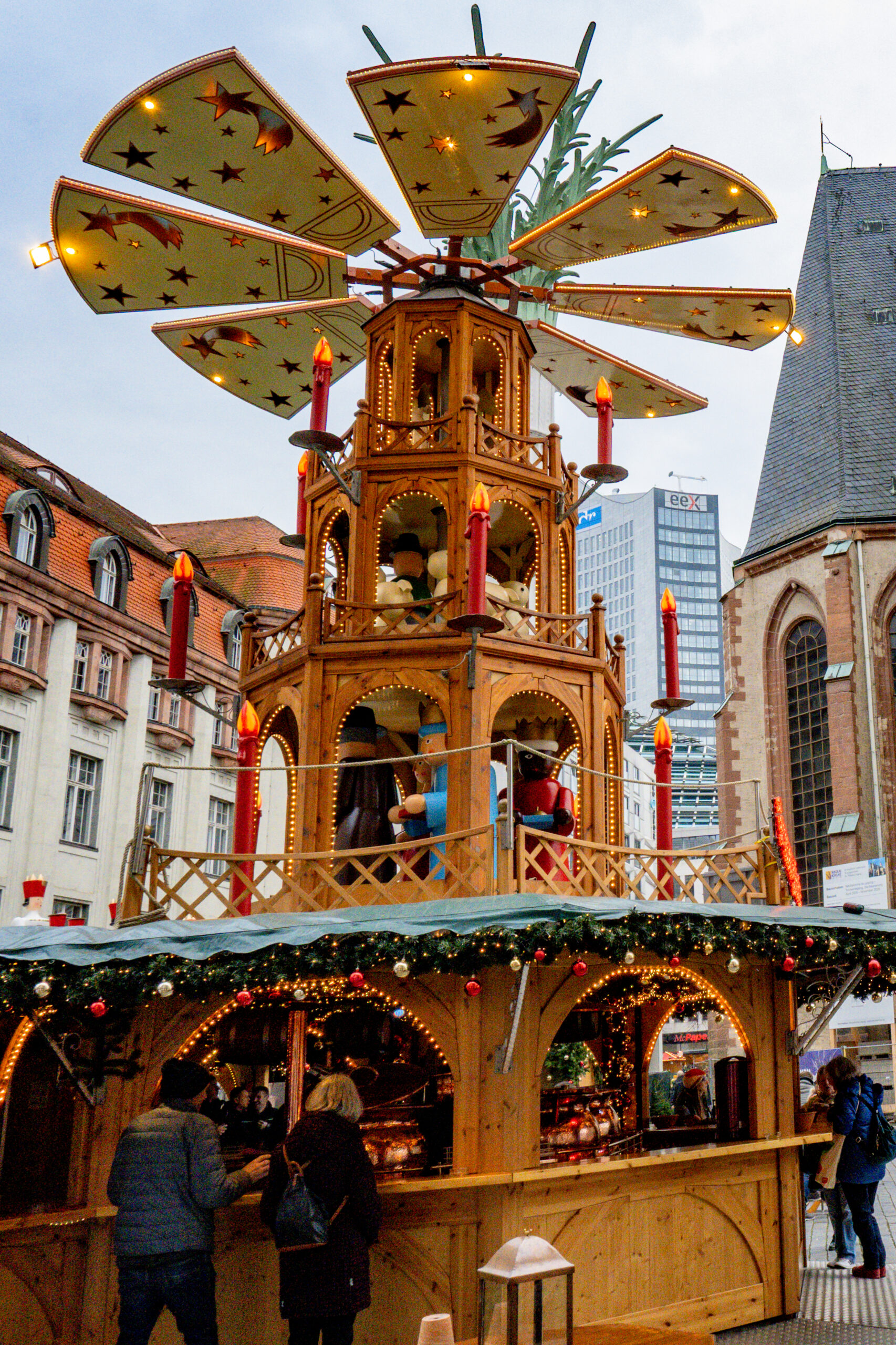
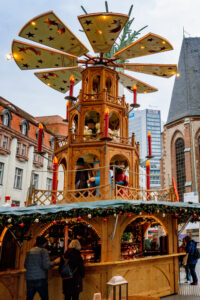
- Just past Augustusplatz, I came across the first of the Christkindlmärkte (Christmas markets)that would be a regular fixture for the remainder of my time in Germany and its neighbouring states. This one was relatively small and unremarkable, but it was just a portent of what was to come.
- The remainder of the afternoon also proved relatively fruitless as I explored the north end of the city. Though, I did learn a little too late that Leipzig has one of the best zoos in Europe. I wish I’d had more time to be able to visit.
- All in all, after the hustle and bustle of Berlin, the quiet streets of Leipzig were somewhat underwhelming. I have a feeling that late autumn isn’t the city’s strength. It’s a place known for its strong association with music, the home of Bach and Wagner, and hosts music festivals throughout summer. It’s my guess that that’s when it really shines.
Dresden
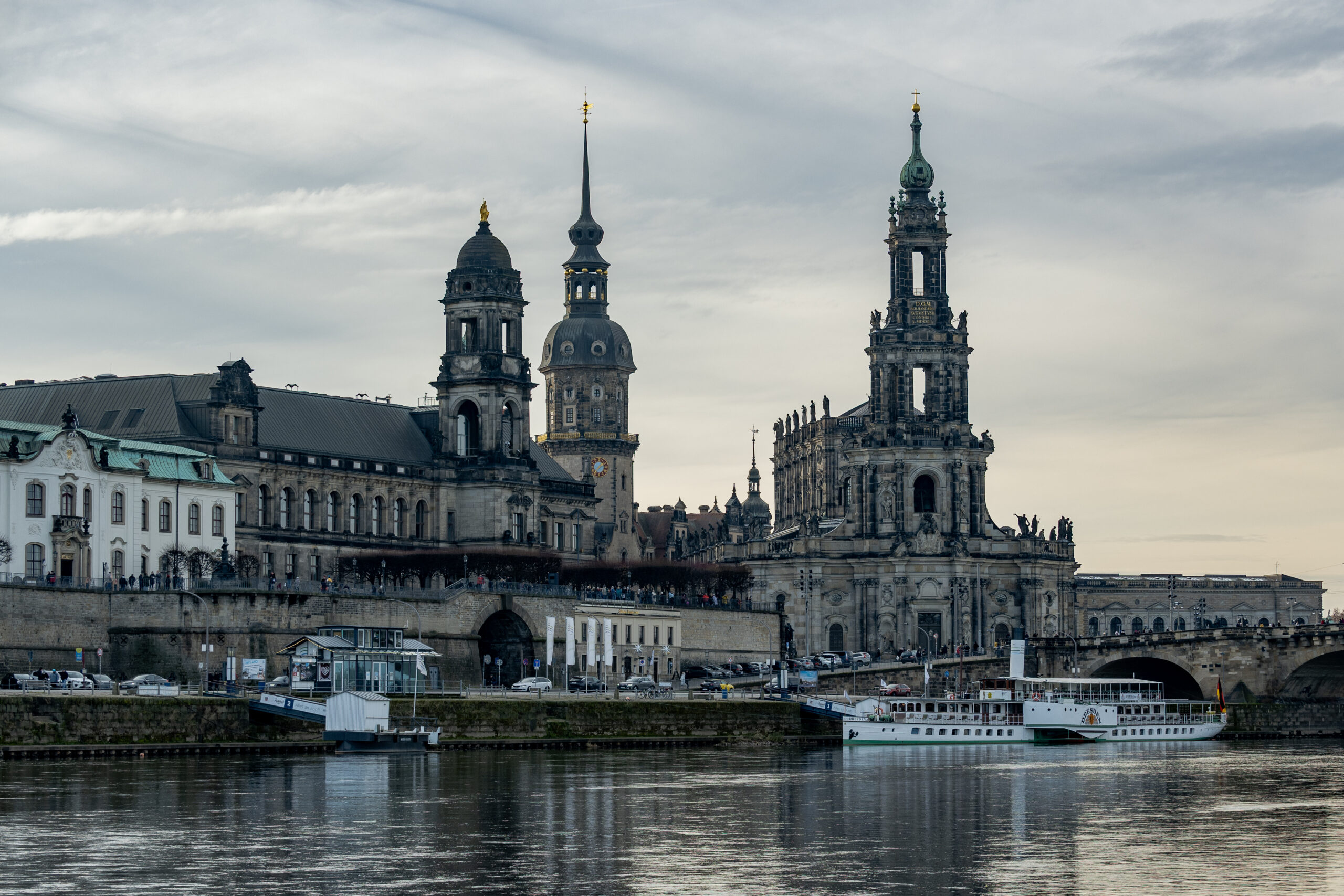
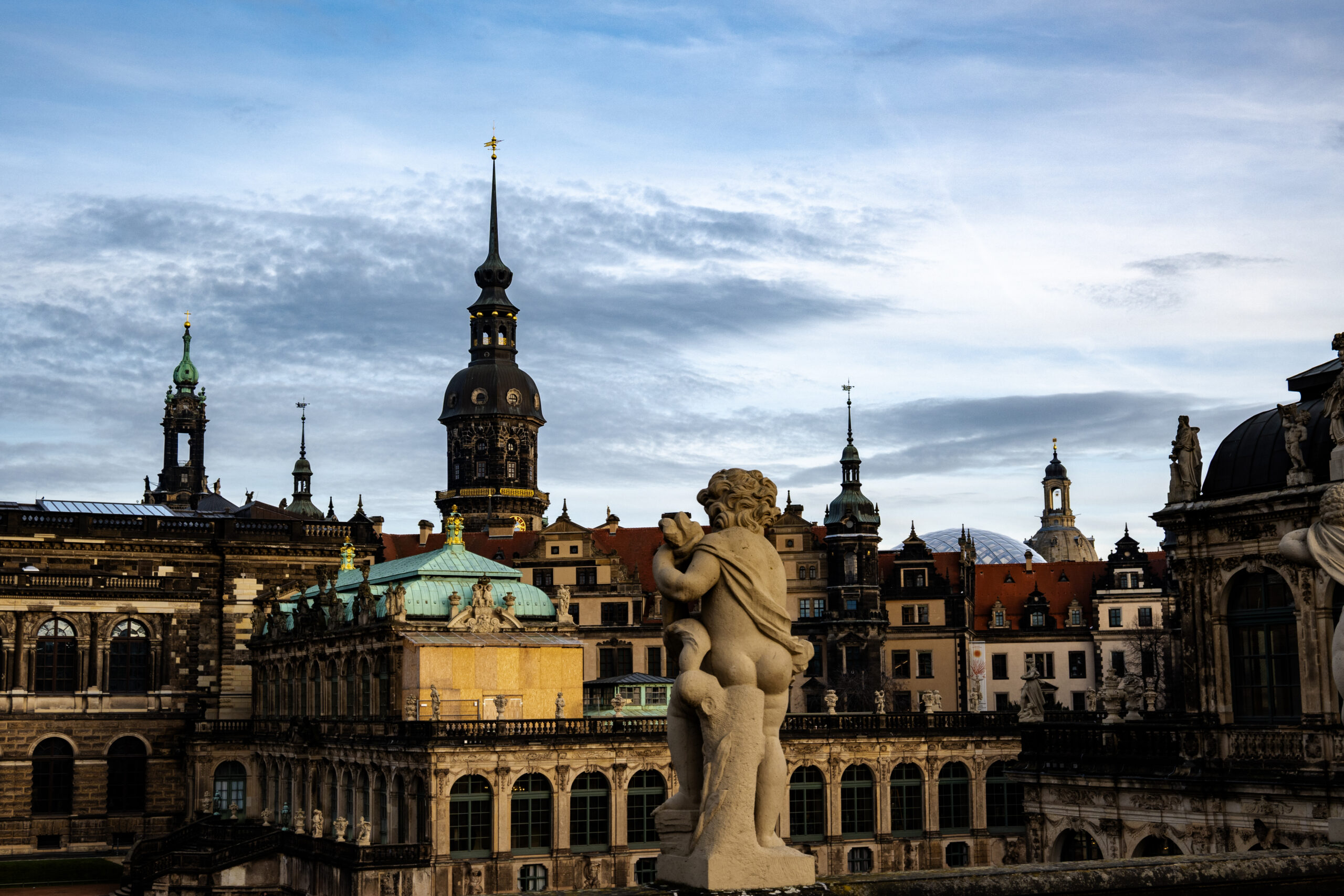
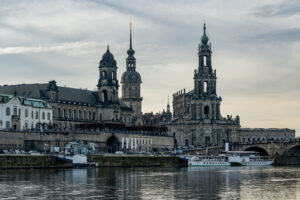
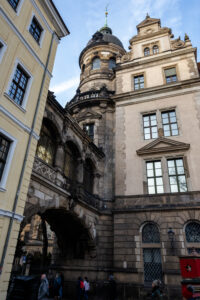
- Dresden stands an hour by train southwest of Leipzig, on the shores of the Elbe River, within spitting distance of the border with Czechia. 90% of its historical centre was destroyed by Allied carpet-bombing that led to a firestorm that raged for days, killed roughly 25,000 people and destroyed some 75,000 homes. Despite this, you would have a hard time knowing that the city was afflicted by such destruction today. The skyline from the banks of the Elbe is one of the most fantastic that I’ve seen in Europe. The south side of the river is lined with gorgeous, baroque buildings that can only leave you wondering about the splendor that must have preceded the bombings.
- My hostel was in the Neustadt district on the north side of the river. A vibrant, artsy area of the city filled with tight alleyways and corridors lined with boutiques, antique shops and other fun curiosities. The Hostel Mondpalast was tucked away on one of these streets and it was one of my favorite stays on this trip. It was a comfy, cozy vibe that suited the cooler season and the shorter days.
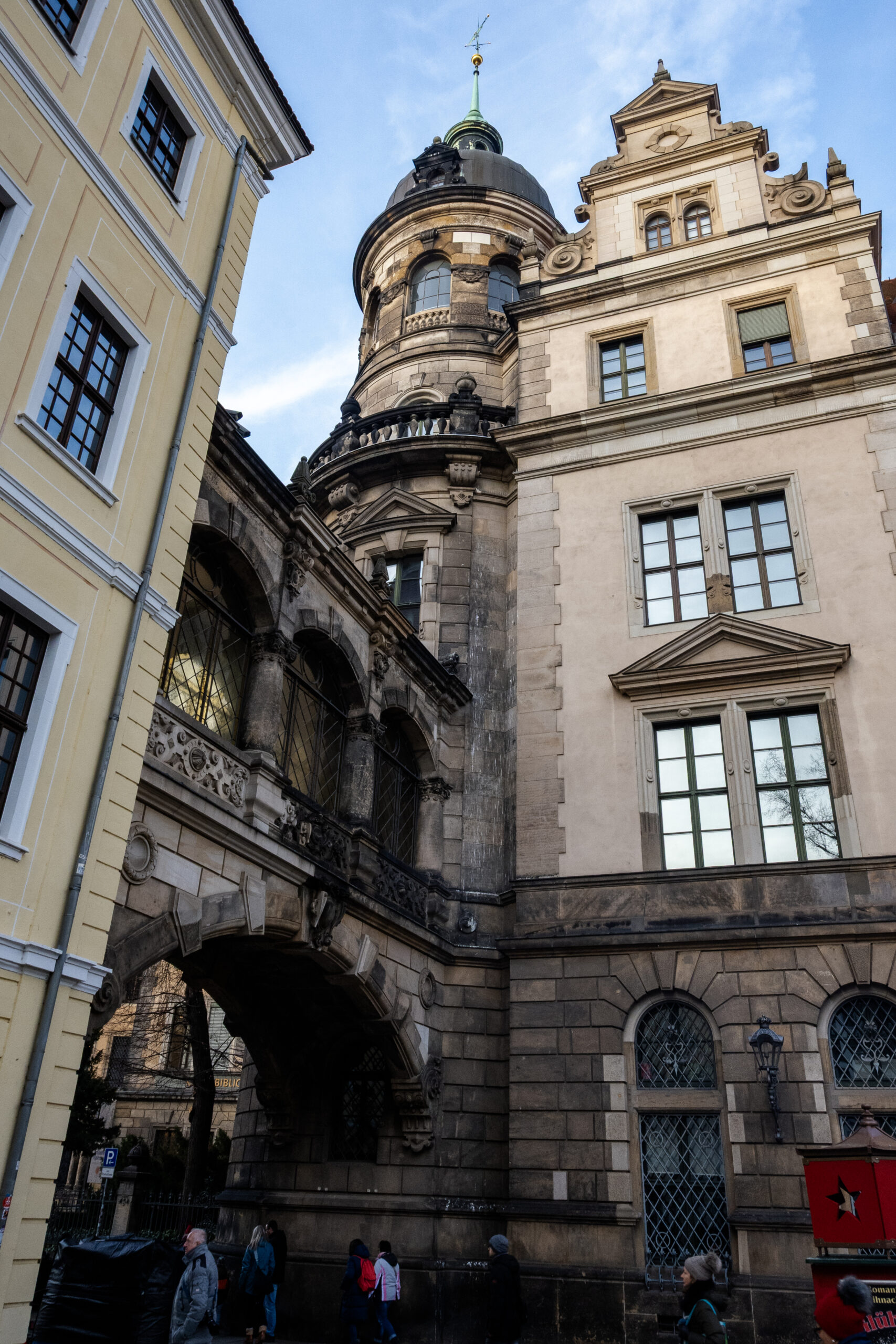
- I spent my first evening in Dresden walking along the northern bank of the Elbe taking in the dramatic skyline on the opposite shore. I crossed the Augustusbrücke (Augustus Bridge) on a large sidewalk that felt tight with the enormous number of tourists that filled it beyond capacity. I moved with the crowd through the gates of the Georgentor (George Tower) that marked the entrance to the Altestadt (Old City). Following the stream of people deeper into the city, I soon found myself at the Altmarkt where the Striezelmarkt, reputedly the oldest Christmas market in the world dating to 1434, was in full swing.
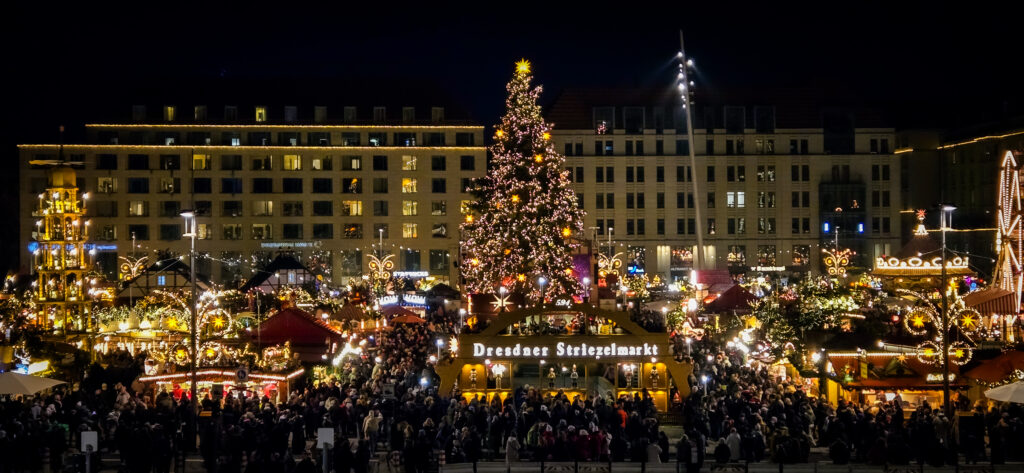
- Walking through the market was an endeavor in itself. It was only 4:30 in the afternoon, despite the settling darkness, but the entire square was filled with people, vendors, carnival rides, stages and the traditional Weihnachtspyramide (Christmas Pyramid). The Christmas Pyramid is a large tower-cum-carousel that displays a rotating nativity scene along with other Christmas characters and the one is Streizelmarkt was the largest that I would see amongst all of the Christmas markets that I would visit. I very slowly made my way through the market, pushing through tiny cracks in the otherwise solid mass of bodies that filled the alleys between the stalls. The air was full of all sorts of smells, mulled wine, fried meats, fresh bretzels and all kinds of sweets. Families and friends mingled taking food, talking and laughing, and shopping at stalls hawking toys, decorations, and clothing. It was a very jolly atmosphere, but the tight quarters quickly had me pushing to the edge where I could observe from a more comfortable distance. Thankfully, the Culturpalast across the street offered an elevated balcony that was the perfect venue for observing the festivities.
- The following day, I set out on a wandering exploration of the city. I started in the Neustadt area around my hostel, working north towards the Museum of Military History. The museum is housed in a very neat building that explicitly presents the intersection of the old and the modern, with a graceful neo-classical building that is neatly bisected by a triangular shard of glass and steel, like a piece of shrapnel slicing through the old facade. The exterior grounds of the museum displays several pieces of military equipment from both the Cold War and modern eras of the German military.
- From the museum, I headed back south towards the Elbe river, coming upon the second of the large Christmas Markets in Dresden, Augustusmarkt. This market was less busy, partially because it was still mid-morning on a Sunday, and because it was less physically constrained. Standing along a long pedestrian promenade, the Augustmarkt was capped off by a massive Ferris wheel with a bright a LED display that shone like a beacon down the Augustusbrücke, in the opposite direction that I had walked the previous night.
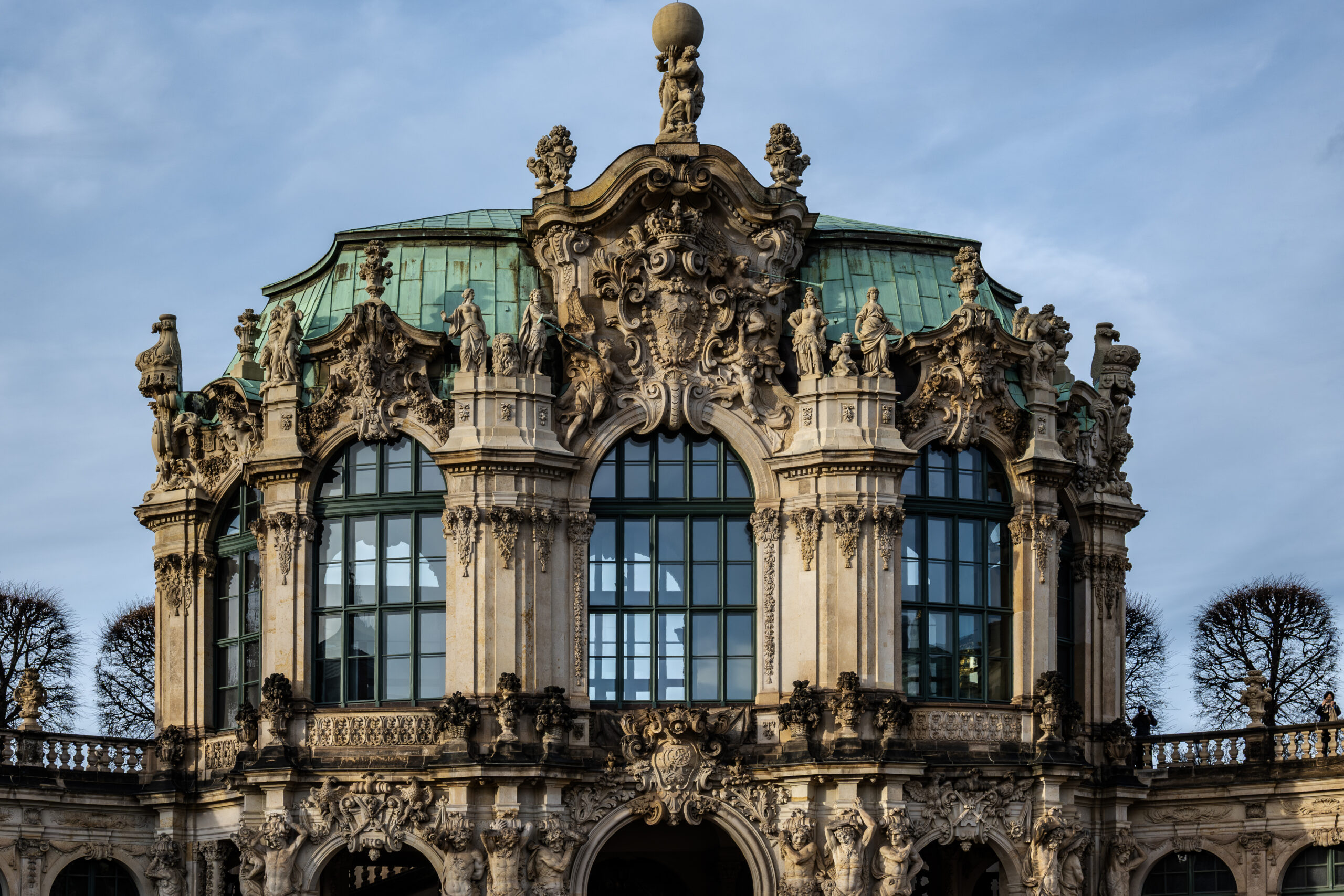
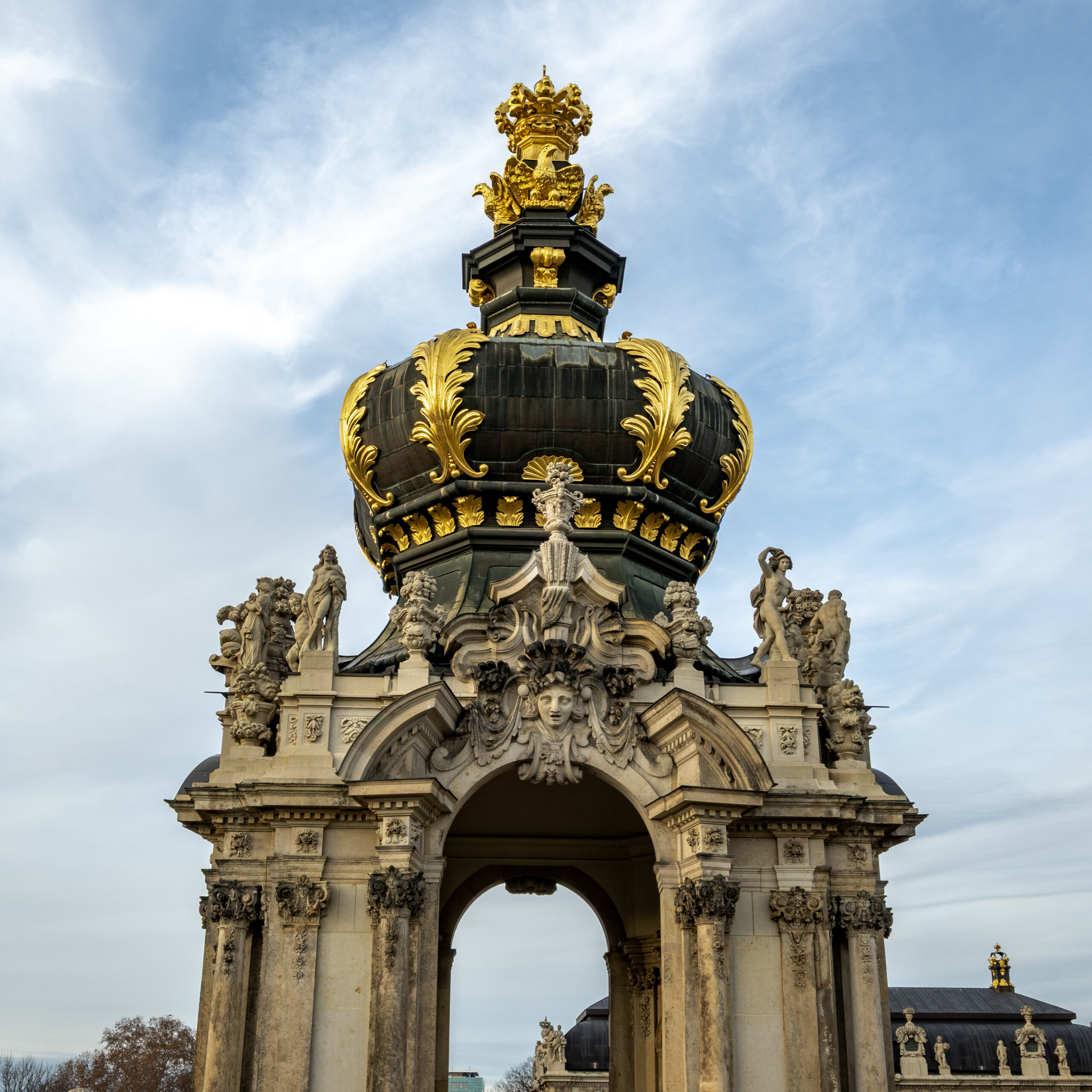
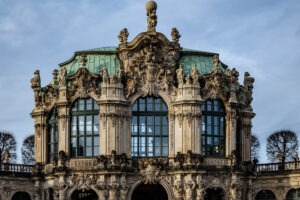
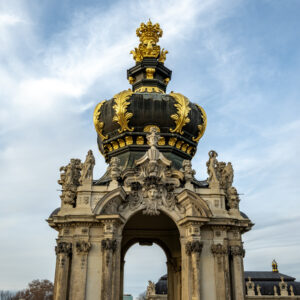
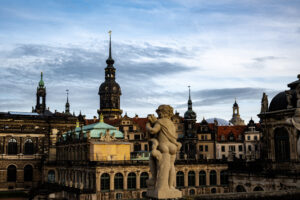
- Stopping for some photos along the banks of the Elbe, I eventually made my way back into the Altstadt, though I veered away from the Altmarkt this time. Instead, I made my way to the Dresdner Zwinger, a palatial walled garden surrounded by hundreds of, what appeared to be, unique statues. Surmounted by a golden crown standing over the south-western gate, the entire complex is incredibly ornate. I ate lunch amongst the garden before climbing the walls to walk the perimeter of the square. The Zwinger was one of the most fantastical places that I visited in my time in Germany.
- I finished my day in Dresden walking out of the Altstadt and into the more modern areas of the city to the south. I was in search of a shopping centre where I could replace both my missing sock and my gloves, which had begun to open holes where my fingertips poked through. Eventually, I found what I was looking in a couple of malls near the train station. Which led me to my final discovery while I was in Dresden. The malls weren’t playing Christmas music. This was basically inconceivable to me. In Canada, the stores and malls barely wait until Halloween has passed to break out the Christmas tunes. But here in Dresden, there wasn’t any music to be heard at all. As someone with little to no fondness for Christmas music, I was pleasantly surprised.
- Overall, Dresden was a really pleasant place to visit. Lots of interesting history is available at the street level and a good mix of old and new keeps things consistently interesting. The high energy of the Christmas markets and the mass of tourists that they attracted made the city feel buzzing and alive in my time there. In contrast to Leipzig, it really shone and even in isolation, it showed very well.
What’s Next
From Dresden, I headed off to the fairytale city of Prague, Czechia. Despite some subpar accomodations, I loved my time in Prague and I’ll you all about it next time!